
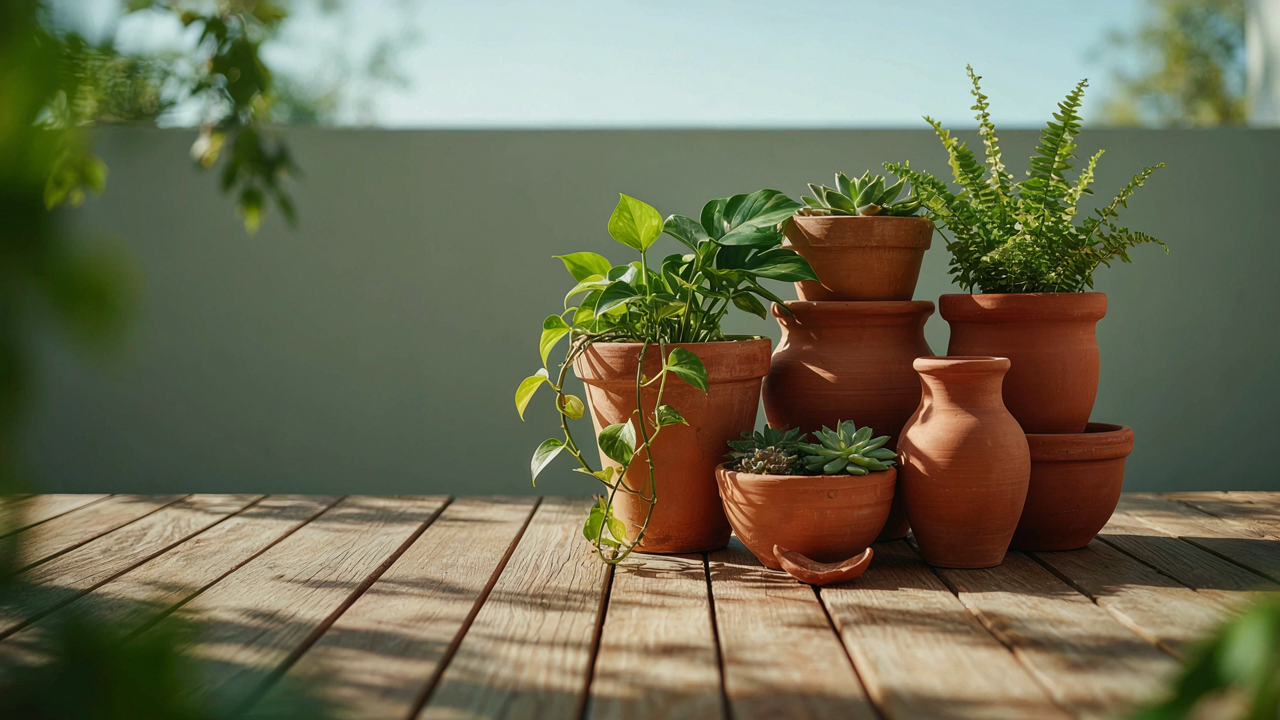
The Drainage Delusion: Why “More Is Better” Kills Your Plants
What Everyone Gets Wrong About Water Movement
You want the reassurance that drainage holes solve your plant problems. They don’t. Here’s the mechanism: terracotta is porous ceramic that wicks moisture upward through capillary action, not just downward through gravity. This means a hole at the bottom doesn’t guarantee water leaves the soil. If soil stays wet above the drainage hole, roots still rot. Most people assume holes work like faucets. They don’t.
The real problem surfaces when gardeners obsess over hole size and number instead of soil composition. A single quarter-inch hole drains adequately if you use the right medium. Cactus mix, perlite blends, and coarse bark all move water faster than standard potting soil. The drainage hole is secondary to what sits above it. You can have five holes and still kill a plant if the soil holds water like a sponge.
Where Root Rot Actually Comes From
Botany teaches us about osmotic pressure and cellular respiration. Apply that here: roots need oxygen, not just water access. When soil stays saturated, anaerobic bacteria colonize the root zone because oxygen can’t reach those cells. This isn’t slow dehydration. This is suffocation followed by decay. Root rot is a bacterial infection triggered by sustained wetness, not poor drainage alone.
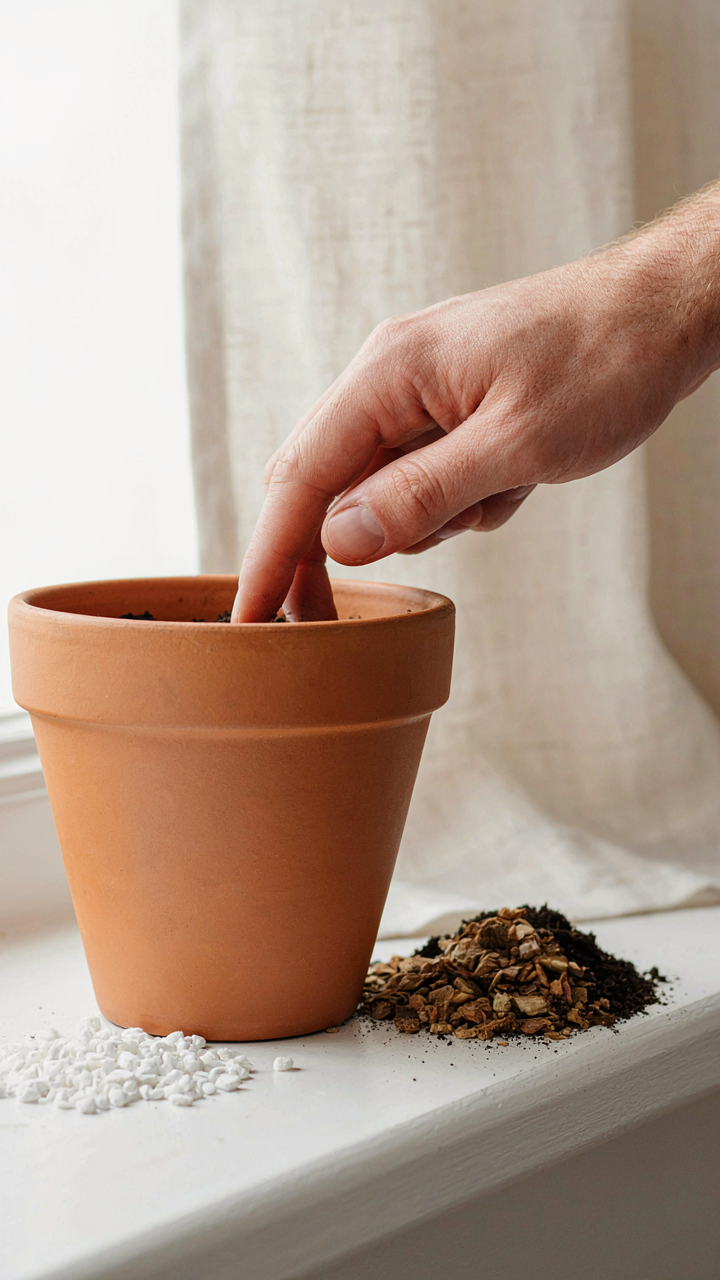
Dehydration happens in the opposite scenario: fast-draining soil in a dry environment, or infrequent watering. Both problems stem from the same source: inconsistent moisture management, not drainage failure. The balance point isn’t mystical. It’s mechanical: soil should dry to the touch one inch down between waterings. Check with your finger. When terracotta dries, it lightens in color and weight. Use that signal to water again, not a calendar schedule. This protocol prevents both rot and dehydration.
Beyond The Hole: Engineering Your Terracotta Pot Drainage System
Potting Mix Density For Controlled Release
You want drainage that works without you thinking about it. That’s the real reason you’re reading this. The mechanism is simple: potting mix density controls water velocity. Denser mixes slow water movement through the soil column, letting roots absorb moisture before it escapes. Looser mixes accelerate water through the pot, starving roots and wasting your watering effort. The physics term is hydraulic conductivity—the soil’s ability to transmit water. Dense mix equals lower conductivity. Lower conductivity equals better plant survival.
Most gardeners grab whatever potting soil sits on the shelf. Wrong move. A proper terracotta drainage mix combines base soil, perlite, and compost in ratios that match your plant’s actual water needs. Succulents need 50 percent perlite and coarse sand. Tropical plants need 30 percent perlite and 40 percent compost. Herbs need 20 percent perlite. The density you build into the soil becomes your first defense against either waterlogging or drought. Adjust the ratio before the water hits the pot, not after the plant dies.
Strategic Use Of Drainage Layers
The conventional wisdom says add gravel at the pot bottom. This is incomplete advice that wastes space and defeats terracotta’s purpose. Terracotta is porous—water moves through the clay walls themselves, not just the drainage hole. A gravel layer creates a false water table that traps moisture against the roots. Better approach: use a thin layer of broken terracotta shards or coarse sand directly above the hole. This prevents soil migration while maintaining water flow.
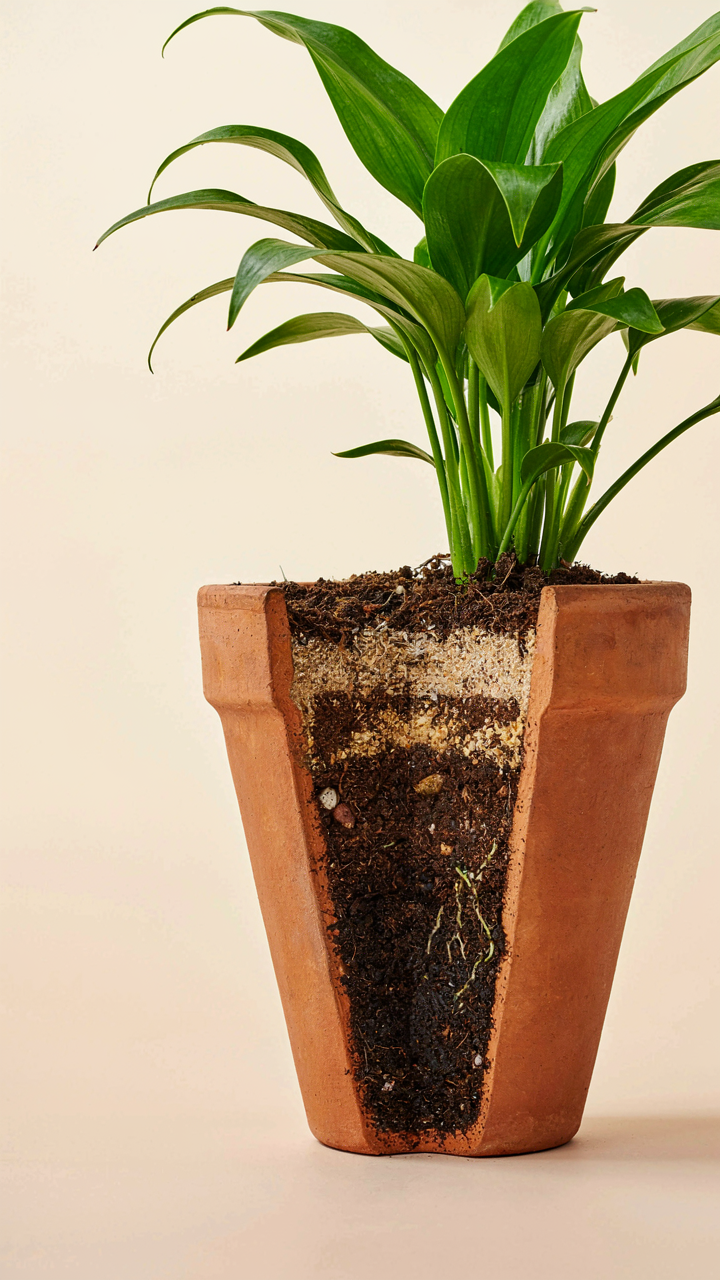
The real leverage comes from layering soil density, not physical barriers. Place your densest potting mix at the bottom two inches. This layer slows water enough to be absorbed. The middle section uses your standard mix. The top inch stays loose and airy for root respiration. This gradient mimics natural soil horizons and gives you precise control over drainage speed without reliance on stacked materials. Water moves down predictably, roots stay hydrated, and you eliminate guesswork from every watering cycle.
The Hydro Static Advantage: Applying Fluid Dynamics To Terracotta Pots

Capillary Action In Potting Mix And Terracotta
You want this section because you’re tired of killing plants and need to know you’re doing drainage right. Here’s the actual mechanism: capillary action is fluid dynamics in miniature. Water moves upward through soil against gravity because terracotta’s porous structure creates a network of tiny channels. These channels pull moisture up from the drainage hole, defying your assumption that water simply drains down. The porous walls amplify this effect, drawing water sideways and upward through adhesive forces between water molecules and clay particles.
Most drainage advice stops at “make a hole in the bottom.” That’s incomplete. You need to understand that terracotta’s porosity works against you in wet climates or overwatering scenarios. The capillary pull keeps soil saturated longer than non porous materials. Counteract this by layering coarser substrate at the pot’s base where water pools. Use sand or perlite in the bottom third to interrupt capillary action and force water out before roots absorb excess moisture. This changes the water’s path from “up and held” to “down and out.”
Water Tension And Adhesion Dynamics
Water molecules stick to terracotta surfaces through adhesive force. This adhesion creates a meniscus at soil level, a curved water surface that holds moisture in place rather than releasing it. The tighter the fit between water and clay, the longer saturation persists. Small pores create stronger adhesion than large ones, which is why fine potting soil stays wet longer in terracotta than coarse mix does.
The drainage problem isn’t the hole at the bottom. It’s the water film coating soil particles throughout the pot. Adhesion keeps this film present even after drainage theoretically stops. Combat this by breaking adhesion’s grip: use terracotta pots with thicker walls to slow water diffusion through the clay itself, and repot every 12 to 18 months because old terracotta’s pores eventually clog with mineral deposits and salts that strengthen adhesive bonds. This chemical buildup is why your pots drain worse each season without active maintenance.
Terracotta’s True Power: The Evaporation Engine For Plant Care

Porous Clay And Passive Moisture Regulation
You want terracotta because it looks expensive and signals you actually care about plants. What you’re really getting is a material that doesn’t pretend to hold water like plastic does. Terracotta is porous fired clay. Its structure contains microscopic air pockets that allow water to move through the pot walls themselves, not just out the bottom drainage hole. This is the mechanism that separates it from every sealed container you’ve used before.
Most people think drainage means the hole at the bottom. That’s incomplete. Terracotta sweats. Water molecules evaporate through the entire pot surface, which means the soil stays aerobic longer and roots don’t suffocate in stagnant moisture. A four-inch terracotta pot dries faster than a plastic one holding identical soil and the same plant, even with identical watering. This speed is the feature, not a flaw you need to compensate for.
Optimizing Evaporative Cooling In Potted Plants
Evaporative cooling is a thermodynamic principle, and terracotta executes it passively. When water evaporates from soil and pot walls, it pulls thermal energy from the immediate environment, cooling the root zone slightly. In summer heat, this matters. A terracotta pot in direct sun stays measurably cooler than plastic because of this phase change happening continuously across the pot’s surface, not just at the drainage hole.
Your actual protocol: use terracotta for heat-sensitive plants in warm climates or south-facing windows. Place the pot where air can circulate on all sides, not sealed against a wall or fence. Leave the top inch of soil exposed to air so evaporation happens at the surface too. Water in early morning so the evaporative cycle starts before peak heat. This isn’t about watering less frequently. It’s about accelerating moisture loss so roots get oxygen and temperature regulation simultaneously.
The Substrate Selection Protocol: Matching Potting Mix To Plant Needs

Custom Blends For Succulents Versus Thirsty Edibles
You want the perfect mix so you stop killing plants and feel like you finally know what you’re doing. Here’s what actually matters: terracotta is porous, which means water moves through it faster than through plastic. This is drainage physics in action. A succulent in terracotta doesn’t need the same substrate as a tomato because water evacuation rates differ. Succulents require fast drainage to prevent root rot in their dormant seasons. Thirsty edibles like basil need substrate that retains moisture longer without becoming waterlogged.
Build succulent mixes with 60 percent inorganic material: perlite, coarse sand, or pumice. Add 40 percent quality potting soil. This ratio matches terracotta’s water movement speed. For edibles, flip the ratio: 60 percent potting soil, 40 percent drainage material. Edibles demand consistent moisture availability without sitting in wet substrate. Test your mix by watering and observing how quickly the soil surface dries. Adjust inorganic content up if water pools on top after one hour. Adjust down if the soil dries completely within four hours.
Garden Soil Is Substrate Sabotage In Terracotta
Most people ignore this and wonder why their pots fail within a season. Garden soil compacts in containers. Terracotta amplifies this problem because drainage depends on substrate structure staying open. When soil compacts, water movement stops regardless of pot permeability. Garden soil also contains inconsistent particle sizes, clay content, and microorganisms that behave differently under container conditions than in ground beds.
Use only bagged potting soil or custom-blended mixes as your base. Potting soil is engineered for container drainage and particle consistency. Garden soil belongs in the ground. The cost difference between garden soil and potting soil is negligible over a season when you factor in replanting dead plants. Terracotta pots amplify every substrate mistake because their porosity exposes poor drainage architecture immediately. Fill your pots with potting soil first, then adjust the mix based on what you’re growing.
Microclimate Mastery: Drainage In Balcony Garden & Home Vegetable Garden

Sun Exposure And Wind’s Impact On Drying
You want your plants to look thriving without the daily maintenance headache. Here’s what actually matters: terracotta breathes through its pores, which means the soil dries faster than in plastic pots. Sun and wind accelerate this evaporation directly. A balcony facing south or west dries soil 40 to 60 percent faster than a north-facing one. Wind compounds this effect by stripping moisture from the soil surface and the pot walls simultaneously.
The mistake most people make is treating all terracotta pots identically regardless of placement. A pot on a windy balcony needs deeper saucers or more frequent watering schedules than the same pot in a sheltered corner. The mechanism isn’t complicated: direct solar radiation heats the pot and soil, increasing evaporation rates. Wind removes the humid microclimate around the pot. Measure your actual watering frequency by checking soil moisture at depth, not just the surface, because surface dryness can mask adequate moisture below.
Elevation And Air Circulation Benefits
Raised pots drain faster than ground-level ones because air reaches the pot’s underside. Think of air circulation like capillary action in reverse: gravity pulls water down and out, but stagnant air below the pot prevents evaporation from the drainage hole. Elevating terracotta pots on risers, benches, or pot feet creates an air gap that completes the drainage cycle.
Home vegetable gardens benefit most from this simple elevation principle. A tomato plant in a terracotta pot on the ground retains moisture longer than an identical pot on a bench three feet high. The difference compounds during humid seasons or after rain when ground-level pots sit in their own runoff. Place terracotta pots on slatted benches or pot feet to allow air flow underneath, then water only after confirming the soil is actually dry at two inches depth.
Watering Wisdom: The Art Of Controlled Saturation For Potted Plants
Deep Watering For Root Development
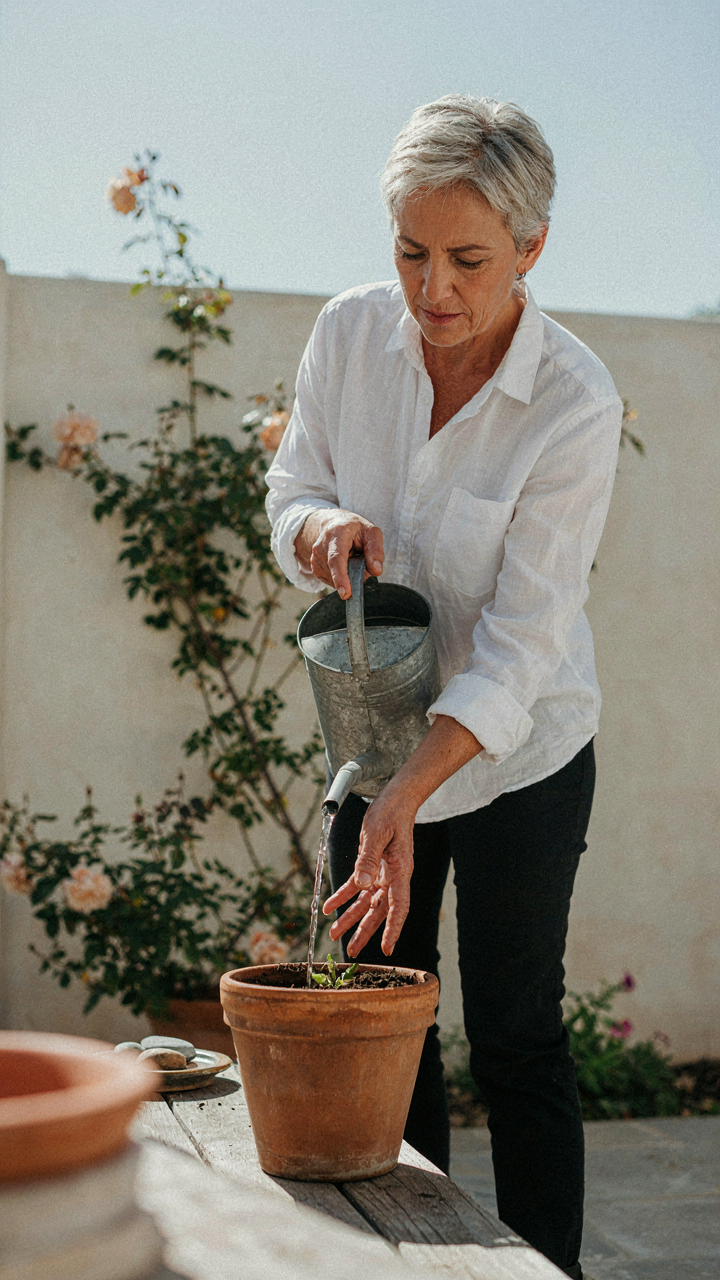
You want your plants to survive long enough to impress someone. The mechanism is simple: roots follow water. When you water shallow, roots cluster near the surface where evaporation kills them fast. Terracotta drainage operates on a capillary principle borrowed from soil physics—water moves through the porous walls, but only if you force it deep enough first. Shallow watering trains roots upward into heat and dryness. Deep watering trains them downward into stability.
The standard advice—water until it drains from the bottom—misses the real target. You’re not watering the soil. You’re saturating the root zone completely, which means watering slowly enough that the water penetrates all the way through without running off the sides. In terracotta, this takes longer than plastic because the walls absorb water. Wait. Let the pot drink. When water finally exits the drainage holes, you’ve achieved full saturation of the growing medium, not just surface moisture.
Plant Thirst Signals
Most people check soil by sticking their finger in, which tells them almost nothing useful. You need to weight the pot instead. A saturated terracotta pot feels significantly heavier than a dry one—the difference is obvious once you hold both. This single method eliminates guesswork better than any moisture meter or calendar schedule, because every environment dries pots at different speeds based on heat, humidity, and airflow.
Visible wilting is the last resort signal. By that point, the plant has already been stressed. Instead, observe the soil surface for cracking, watch for a lighter pot weight than usual, and check that the terracotta itself hasn’t turned pale or chalky on the outside. When the exterior clay looks dry and dusty, the interior typically needs water. Water then, not when the plant tells you it’s dying. The protocol: heft the pot daily for a week to establish baseline weight, then water when it drops noticeably below that baseline.
The “No Saucer” Fallacy: Strategic Water Retention For Plant Decor

Saucers As Deliberate Design, Not Decoration
You want your plants to look intentional on a shelf. That’s why you’re reading this. The real mechanism here borrows from supply chain management: buffering. A saucer doesn’t catch water by accident—it creates a controlled reserve that lets roots access moisture gradually instead of draining it all away the moment you water. Terracotta is porous. Water moves through it fast. Without a saucer underneath, you’re not protecting your floor—you’re hemorrhaging the water your plant needs before roots can use it.
Place a saucer directly under the pot. Use glazed ceramic or sealed wood if you want it to match your interior. The saucer needs to be shallow enough that water doesn’t sit higher than half an inch above the base of the drainage hole. Check the saucer after watering. If standing water remains after thirty minutes, tip it out. This isn’t optional if your pot sits on furniture or flooring you care about.
Standing Water Kills Roots Faster Than Drought
Everyone says saucers cause root rot. That’s incomplete thinking. Root rot happens when roots sit submerged for days, not when water pools for an hour after watering. The real risk isn’t the saucer—it’s forgetting to empty it. Standing water in a saucer becomes stagnant. Oxygen depletes. Anaerobic bacteria colonize the soil. That’s when roots suffocate and decay. The mechanism is timing, not the saucer itself.
Empty the saucer within thirty to forty minutes of watering. This rule applies to all plants in terracotta pots. If your schedule won’t allow regular checking, use a moisture meter to time your watering instead of guessing. Don’t water on a fixed calendar. Water when the soil is dry one inch below the surface, check the saucer afterward, and empty it before you leave the room.
Terracotta Troubleshooting: Diagnosing Drainage Dilemmas

Reading Your Plant’s Distress Signals
You’re here because you’ve killed a plant and you’re trying not to do it again. Here’s what actually happens: terracotta’s porous structure works against you when drainage fails. Water moves through the clay walls themselves, not just out the bottom hole. When drainage stalls, the soil stays saturated and roots suffocate. You’ll see wilting leaves that feel wet, yellowing that spreads from the base upward, and a sour smell from the potting mix. These aren’t random symptoms. They’re the plant telling you the soil never dried between waterings.
Over-drainage creates the opposite problem, though fewer people notice it. Water moves through so fast that roots absorb nothing and nutrients leach out immediately. The soil dries in two days instead of five. Leaves crisp at the edges, growth slows, and the plant looks perpetually stressed despite constant watering. This happens most with very large drainage holes, thin potting mixes, or terracotta aged so thin it’s almost brittle. Use soil saturation timing as your diagnostic tool: check the pot’s weight before and after watering. If it’s heavy for only hours, you’re over-draining. If it stays heavy for a week, you’re under-draining.
Fixing What’s Actually Broken
Most advice about terracotta drainage ignores the real variables. People say add a drainage hole or use cactus soil, but they miss the soil-to-pot ratio mechanic that matters most. Your actual problem lives in one of three places: the drainage hole itself, the soil composition, or the watering pattern. Fix the source, not the symptom.
- Clear the drainage hole: Roots and compacted soil block the opening completely. Poke a wooden skewer or old chopstick through from the bottom. Push upward gently to dislodge buildup without crushing the pot’s base.
- Drill a second hole strategically: If one hole drains in under thirty seconds, add a second hole at the opposite side, one inch up from the bottom. This prevents water from pooling in corners.
- Replace the top soil layer: Remove the top two inches of potting mix and replace with fresh, coarser material. Old soil compacts and blocks water movement through the profile.
- Amend your mix immediately: Mix one part perlite or coarse sand into your existing potting soil. This increases pore space without requiring a full repot.
- Adjust your watering schedule: Water only when the top inch feels dry. Skip the daily misting habit that keeps soil perpetually damp around the drain area.
The mechanism is simple: terracotta pots need active water movement, not retention. Every watering should produce visible drainage within thirty seconds. If water sits at the hole, your system is blocked. If water disappears in five seconds, your soil mix is too coarse. Between those two points is where your plant actually lives.
The Resilient Root System: Building Plant Vigor From The Bottom Up
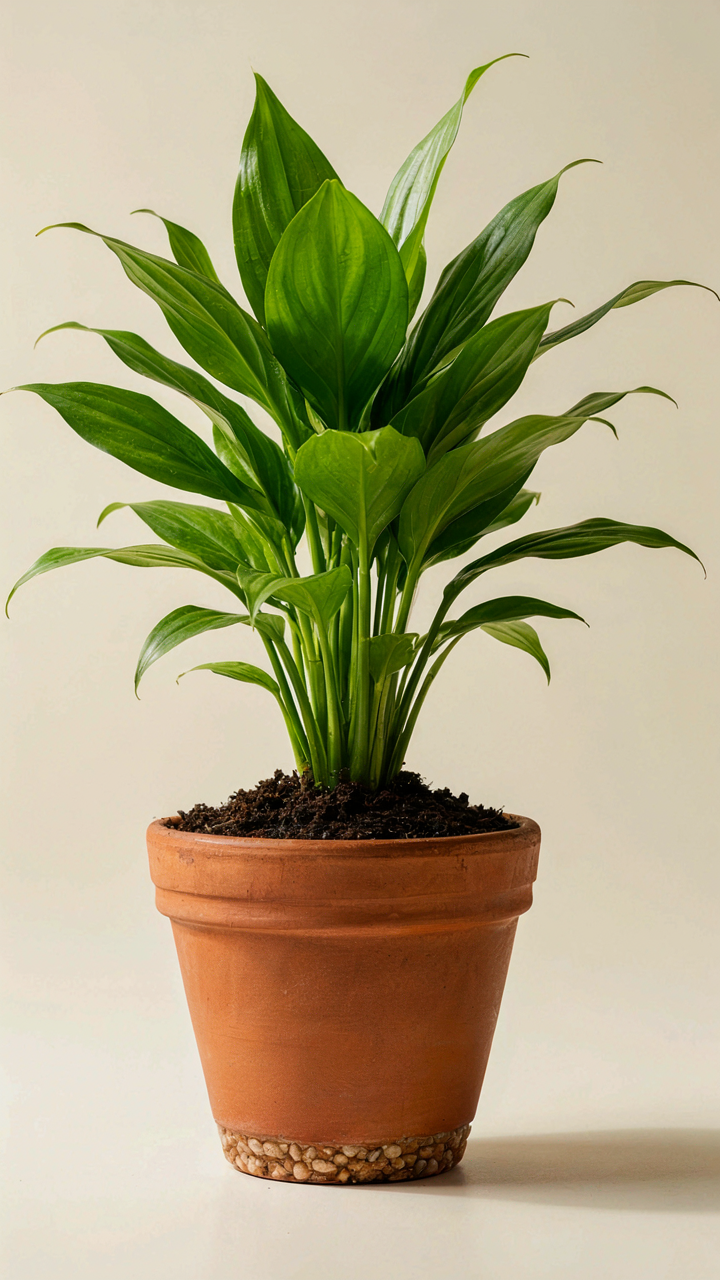
Drainage That Strengthens Root Development
You want your plants to look impressive on the shelf. The real mechanism that makes this happen operates underground, and most people ignore it entirely. Drainage functions like osmotic pressure in plant biology: water moves through soil toward areas of lower concentration, and roots follow that gradient. Poor drainage reverses this process. When water pools around roots, the osmotic gradient collapses, roots stop extending, and the plant stalls. Terracotta accelerates this problem because it absorbs water unevenly. The soil near terracotta walls stays wetter longer than soil in the center, creating dead zones where roots refuse to venture.
Optimized drainage forces roots to work for water. This effort builds a denser, stronger root network. Terracotta pots with proper drainage holes at the base create consistent moisture gradients that push roots downward and outward. Add a drainage layer of broken pottery shards or coarse gravel at the bottom, then layer soil above it. This separation ensures water doesn’t pool around the lowest roots. The root system that develops under these conditions is fundamentally different: thicker cell walls, more lateral branching, better nutrient uptake. Stronger roots make everything above ground perform better because the foundation actually supports growth instead of hindering it.
Sustained Health Through Structural Consistency
The common advice says “just water less often” and calls it a day. That misses the structural reality. Long-term plant health in terracotta depends on maintaining the same drainage capacity month after month, year after year. Terracotta is porous, meaning it wicks moisture from soil and evaporates it through the walls. This natural behavior works only if drainage holes stay clear and soil composition remains stable. Compressed soil, algae-blocked drainage holes, and mineral salt buildup destroy this system.
Check drainage holes monthly. Clear any debris, sediment, or root blockages immediately. Replace the top inch of soil annually to prevent compaction from settling. This simple protocol maintains the original drainage architecture the root system adapted to. Plants don’t respond to occasional good drainage and then poor drainage. They build their structure based on consistent conditions. When you preserve those conditions, the plant stays vigorous because the root system never needs to panic and reorganize. The mechanism is continuity, not heroic intervention.
Stop Chasing Perfect Drainage; Learn To Command Soil Hydration To Grow Anything

Most people obsess over drainage holes like they’re magic. They’re not. What matters is understanding that terracotta breathes, soil holds water in layers, and your plant’s roots don’t care about perfection—they care about consistency. Stop treating drainage as a problem to solve and start treating it as a tool you control. Right now, grab one pot you own, add a drainage layer, then water it intentionally. Watch how fast it drains. That observation beats every drainage tip ever written. You don’t need better pots; you need to become the person who knows exactly how long water sits in theirs.



