
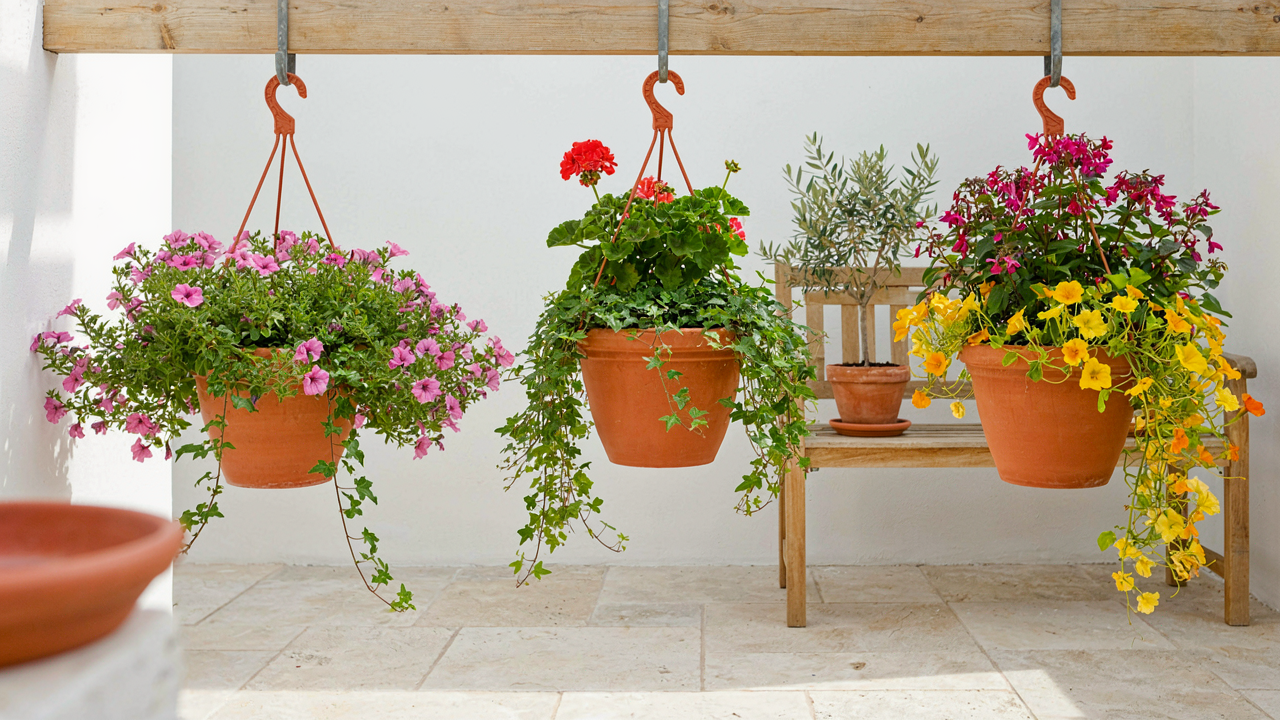
The Evaporation Protocol: Why Your “Simple” Mix Fails

Air Exposure Changes The Game
You want to believe a standard potting mix works everywhere because it simplifies your life. It doesn’t. Hanging baskets live in conditions ground plants never face: full air exposure on all sides accelerates water loss by 40 to 60 percent compared to soil in containers sitting on benches or ground. Physics calls this convective evaporation. Your mix experiences it constantly from morning wind, afternoon heat, and nighttime air circulation that ground soil avoids entirely.
This exposure gap is why dense, compact mixes fail in baskets. A mix that drains properly in a pot suffocates basket roots because the basket structure itself becomes a liability. Water moves through the sides and bottom simultaneously, then evaporates faster than roots can absorb it. The soil dries from the outside in, creating hydrophobic pockets that repel water on subsequent watering cycles. You end up with dead roots and crispy foliage despite watering more frequently.
Nutrient Loss Accelerates In Baskets
Frequent watering in baskets doesn’t just move water through soil. It moves nutrients out just as fast, draining soluble minerals faster than in ground plantings. Leaching happens through both the bottom drainage and lateral seepage through basket sides, which ground pots never experience. Standard advice says add slow-release fertilizer to compensate. That’s incomplete. The real mechanism is this: every drainage cycle removes cations like potassium, calcium, and magnesium that plants need immediately.
Your “simple” mix relies on organic matter to hold these nutrients between waterings. But organic matter in a hanging basket gets depleted faster because it breaks down quicker under constant aeration and temperature swings. Add perlite or coconut coir to increase water retention, and you slow drainage, which invites root rot in humid conditions. The trade-off is real. You need a mix that holds water long enough to let roots absorb nutrients while still draining fast enough to prevent anaerobic soil. That means adjusting your base mix composition specifically for basket conditions, not using ground-planting recipes in a different environment.
Deconstructing “Drainage”: More Than Just Water Flow

Why Your Roots Actually Need Space To Breathe
You care about drainage because you’ve killed plants before and you’re not trying to do it again. But here’s what everyone skips: drainage isn’t about water leaving. It’s about air entering. Borrowing from soil physics, we call this “pore space” – the gaps between particles where oxygen lives. A hanging basket soil mix without sufficient pore space becomes a suffocation chamber. Roots need oxygen to respire, to absorb nutrients, to function at all. Water fills the pores; air should follow once that water drains.
Most soil mixes for baskets fail because they compact over time. The particles settle, crush together, and those critical air gaps vanish. Peat moss, coconut coir, and bark all decompose. Perlite and vermiculite don’t. That’s why the ratio matters more than the ingredients themselves. You’re not just mixing soil. You’re engineering a breathing system that stays stable for an entire growing season.
The Oxygen Exchange That Keeps Roots Alive
Here’s what gets left out of standard advice: a wet soil that drains fast can still suffocate roots if there’s no mechanism for gas exchange to happen continuously. Think of soil as a respiratory organ, because it is one. After water drains through, oxygen needs to move back in, replacing the water that just left. This exchange happens in the pore spaces between particles. Tight, dense soil blocks this exchange entirely, even if water technically drains.
Hanging baskets sit in direct sun and wind, which accelerates water loss. That’s actually an advantage for aeration. As water evaporates from the surface and drains from below, fresh air rushes in to fill those gaps. But only if the gaps exist in the first place. Your mix needs 40-50 percent pore space minimum to support consistent oxygen flow. Use 60 percent quality potting base, 25 percent perlite, and 15 percent bark to lock that ratio in place throughout the season.
The Minimalist Media Principle For Plants For Hanging Baskets

Why Dense Soil Kills Hanging Baskets
You want to believe that premium potting soil from a bag works everywhere because buying the right product feels like control. It doesn’t. Heavy soil in hanging baskets fails because gravity compounds density. Physics calls this load bearing—the weight distribution problem where a container suspended from above experiences cumulative stress. Dense soil means roots stay wet longer, air pockets collapse, and roots suffocate faster than they would in ground soil. The mechanism is mechanical, not mysterious.
Standard garden soil or even most “potting mixes” compact under their own weight when suspended. Water drains poorly. Oxygen doesn’t reach the root zone. Plants decline in weeks, not months. You see wilting and assume underwatering, so you water more, accelerating root rot. The real problem was the media choice, not your care routine. Hanging baskets demand soil that stays porous under gravitational load.
Structural Materials That Actually Stay Light
The container gardening industry borrowed concepts from engineering: void ratio determines drainage performance and oxygen availability. A hanging basket’s soil needs an aggressive void ratio—more air space, less material. Perlite, bark chips, and coarse coconut coir create that structure. These materials resist compaction because they’re irregular and don’t nest tightly together the way fine particles do.
Build your mix with one base material that holds some moisture, then add two structural components that won’t compress. Coco coir or peat moss as your base layer provides water retention without waterlogging when paired with chunky additions. Add perlite or pumice at a 30 to 40 percent ratio by volume, plus orchid bark at another 20 percent. The basket stays light enough to hang safely, drainage stays fast enough to prevent root disease, and your plants actually survive the season. Mix these proportions by hand in a bucket before filling the basket—don’t guess the ratio mid-pour.
Nutrient Release Dynamics: Beyond Basic Fertilizing
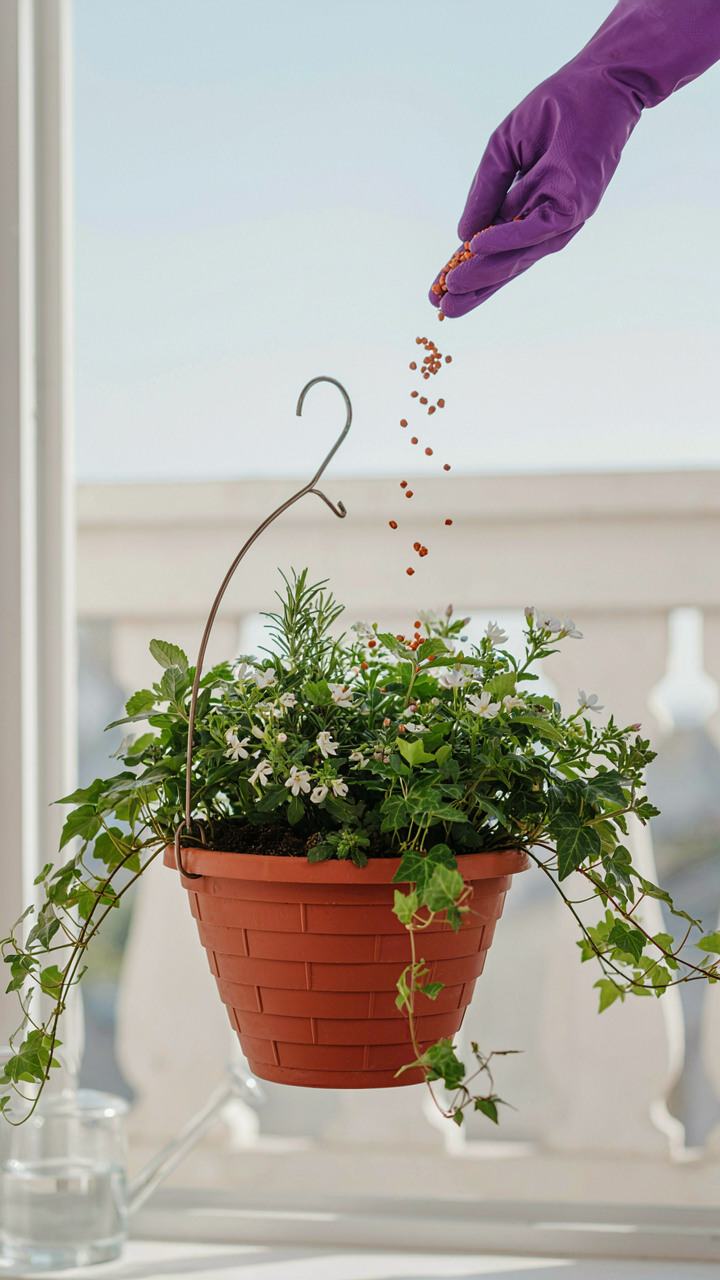
When Fertilizer Timing Actually Matters
You want to feed your plants without babysitting them. That’s the real reason you care about this section. Controlled-release fertilizers work by using chemistry, not magic. The mechanism is encapsulation: manufacturers coat nutrient particles in polymer shells that degrade on a predictable schedule based on soil temperature and moisture. When water enters the coating, it dissolves the nutrients inside at a measurable rate. This isn’t guesswork.
Most hanging basket advice treats fertilizer as a binary choice: liquid feed weekly or slow-release pellets and forget it. Both approaches miss the point. The soil itself is a delivery system that either accelerates or blocks nutrient availability depending on its structure and microbial load. A loose, well-draining mix with peat moss or coco coir changes how fast water moves through the substrate, which directly changes how fast the polymer coating breaks down. Denser mixes slow that process. Temperature matters more than people admit—a basket in direct sun releases nutrients faster than one in shade because the soil warms, speeding polymer degradation.
The Soil Microbiome Isn’t Optional
Biology turns your basket into a nutrient factory if you understand the mechanism. Microorganisms in the soil don’t just exist passively—they actively convert locked nutrients into plant-available forms through decomposition and metabolic processes. Bacteria and fungi colonize organic matter in your mix (peat, coco, bark, compost) and break it down. This process releases nitrogen, phosphorus, and potassium that weren’t immediately accessible before. The speed of this biological work depends entirely on whether your mix contains living organic material or if you’ve built it from inert components alone.
A hanging basket soil mix loaded with raw bark or fresh peat houses dormant microbes. Add moisture and warmth, and populations spike. If your mix lacks any organic matter—just perlite, sand, and vermiculite—you’ve created a sterile sandbox. Nutrients won’t unlock beyond what you dissolve with water. Integrate aged compost or high-quality coco coir into your base mix, and microbial activity becomes your silent co-feeder. Your job is supplying enough organic substrate and stable moisture. The microbes handle nutrient conversion from there.
The Biomimicry Blueprint For Making Hanging Flower Baskets

What Nature Actually Gets Right About Drainage
You want this section to validate that you’re doing something smart by copying nature instead of just buying bagged soil like everyone else. Here’s the real mechanism: forest floors and deserts solve the same problem differently because their water supply differs, not because one is inherently superior. Borrowing from ecology, a hanging basket soil mix must balance water retention and air space the way a forest floor balances decomposition and root penetration. Dense forest soil holds water because rain is constant. Desert soil drains fast because it isn’t. Your basket sits between both worlds, exposed to sun and wind yet watered on a schedule you control.
Most hanging basket advice ignores this context shift. People say “use peat and perlite” without explaining why that ratio fails in full sun or succeeds in shade. The mechanism is simple: your soil mix must match your environment’s water pressure, not nature’s. A north-facing basket under an eave needs moisture retention closer to forest floor logic. A south-facing basket in direct sun needs drainage closer to desert logic. The ratio changes the problem changes. Start by naming your actual conditions before you touch the ingredients.
Building A Self Regulating System
A self-regulating ecosystem isn’t poetic. It’s a system where inputs and outputs stay balanced without constant intervention. Your hanging basket soil does this through capillary action, air pockets, and microbial activity working together. When you get the structure right, water moves where it needs to go, roots breathe, and nutrients stay available without you obsessing over watering schedules. The soil becomes a buffer instead of a liability.
The practical protocol is this: layer your hanging basket soil mix to create zones. Bottom third gets coarser material for drainage and air flow—think chunky bark or large perlite pieces. Middle and upper third gets finer particles with organic matter to hold moisture and nutrients where roots feed. This stratification mimics how real soil develops, but you’re compressing years into one decision. Water enters from the top, gravity pulls it down, capillary action pulls it back up, and the zones regulate how much each layer holds. Build this structure once and your watering becomes predictable.
The Strategic Hydration Cycle: How To Grow Hanging Baskets That Thrive

Water Retention Additives Do Real Work
You want your basket to survive a missed watering day without collapsing. That’s the real reason you’re reading this. The mechanism here comes from soil physics: water potential gradients determine whether moisture moves into roots or stays locked in the matrix. Retention additives like perlite, coconut coir, and peat moss alter that gradient by increasing the soil’s surface area and its affinity for water molecules.
Common advice says “just add perlite and you’re done.” Wrong. Perlite holds air, not water. Coir and peat hold water but compact over time, choking roots. You need the balance. Here’s what each additive does in a hanging basket soil mix:
- Coconut Coir: Retains 8 to 10 times its weight in water while resisting decomposition longer than peat moss in acidic or neutral conditions.
- Peat Moss: Holds moisture aggressively but acidifies soil gradually; use sparingly unless your plants tolerate lower pH ranges.
- Perlite: Creates air pockets that prevent compaction; improves drainage but does not retain water despite common misconceptions.
- Vermiculite: Holds water and nutrients effectively but traps excess moisture in dense mixes, risking root rot in humid climates.
- Aged Bark Chunks: Provide drainage, resist breakdown, and create air channels while holding moderate moisture in the spaces between particles.
A strategic mix combines three elements: a water-holding base (coir or peat at 40 percent), drainage insurance (perlite at 30 percent), and structural stability (bark or compost at 30 percent). This ratio prevents both drought stress and waterlogging. Test the mix by squeezing a handful after watering. It should hold together loosely, not compact into a brick or crumble to dust.
Wicking Systems For Consistent Moisture
Hanging baskets dry faster than ground-level pots because air circulates on all sides. Most growers respond by watering more frequently, which wastes time and creates inconsistent moisture levels that stress plants. The real solution uses capillary action: the physical force that pulls water upward through soil pores against gravity.
A simple wicking system works like this. Place a length of cotton rope or fabric strip into the soil before planting, leaving one end dangling below the basket. Set the basket’s drainage hole over a water reservoir or wet sponge. Water climbs the wick and moistens the soil from below as the mix dries. You can buy commercial wicking setups, but a cotton rope from any hardware store costs almost nothing and performs identically. The wick must stay in contact with both the wet source and the soil for capillary pull to work. Anchor the wick deep enough that it doesn’t slip out as plants root. Check the water level in your reservoir every three to four days during growing season. This system eliminates the daily guessing game and keeps moisture in the optimal zone without pooling water at the surface.
The “Coffee Grounds Fallacy” And Other Myths For Food Articles
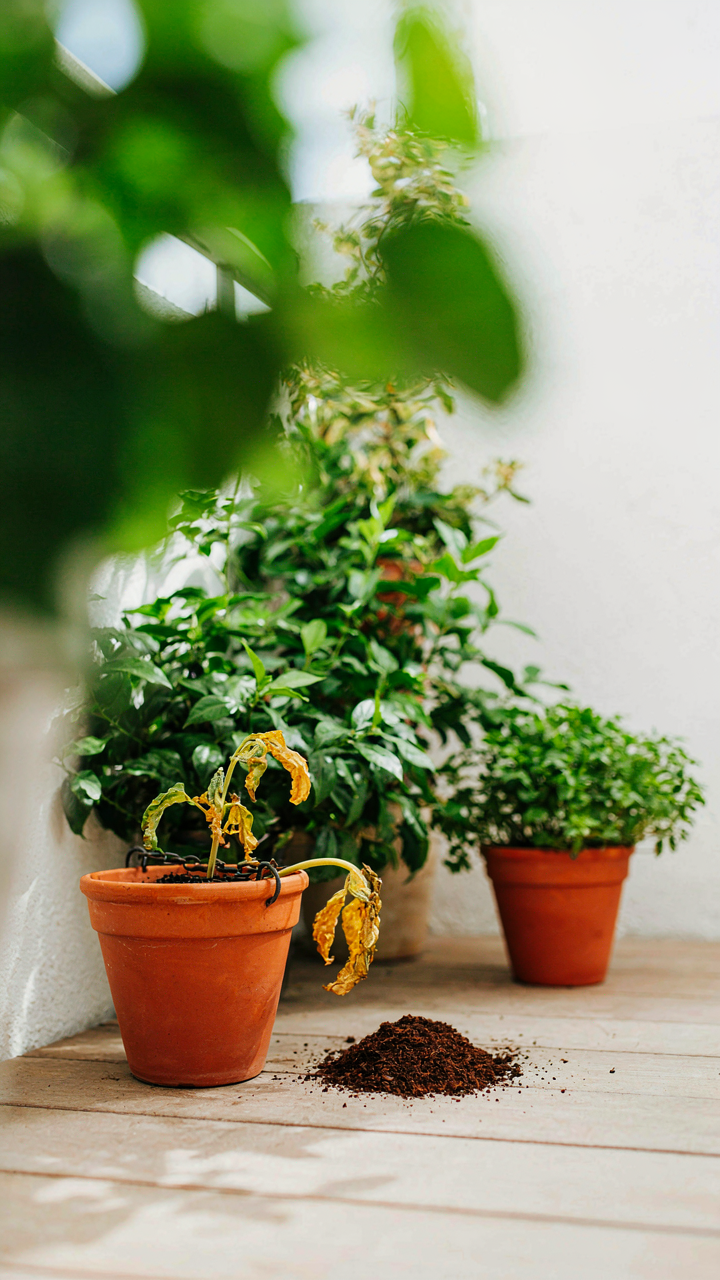
What Actually Gets Sold As Soil Wisdom
You want to believe soil amendments are magic because admitting the basics matter feels boring. Here’s the mechanism: people conflate “organic” with “beneficial,” then recommend whatever sits in their kitchen. Coffee grounds, eggshells, banana peels—none of these belong in hanging basket soil at concentration levels anyone actually applies them. They decompose unevenly, lock up nutrients temporarily, and acidify soil in unpredictable ways.
The real problem is timing and ratio. A handful of grounds in a five-gallon container does nothing. A cup in the same basket creates anaerobic pockets where roots suffocate. Gardeners hear “compost your scraps” and skip the part about proper decomposition. You need finished compost broken down over months, not fresh kitchen waste expecting instant plant benefit.
The Materials That Actually Change Drainage And Retention
Soil physics governs how water and air move through your basket. Think of it like hydraulic systems: pressure and resistance determine flow rate. Perlite, bark, and coconut coir each occupy space differently, forcing water into specific pathways. Perlite creates air channels immediately. Bark takes weeks to establish capillary action. Coco coir holds water but compacts under its own weight over time.
Stop recommending equal parts of everything and pretending it works universally. A trailing petunia needs different ratios than a dense ornamental fern. The mechanism isn’t mystical: larger particles create macro pores for drainage, smaller particles create micro pores for water retention. Measure your components by volume, not feel. The standard base of 40 percent peat or coco, 30 percent perlite, and 30 percent bark works because it balances both forces consistently.
The Continuous Improvement Loop For Making Hanging Baskets
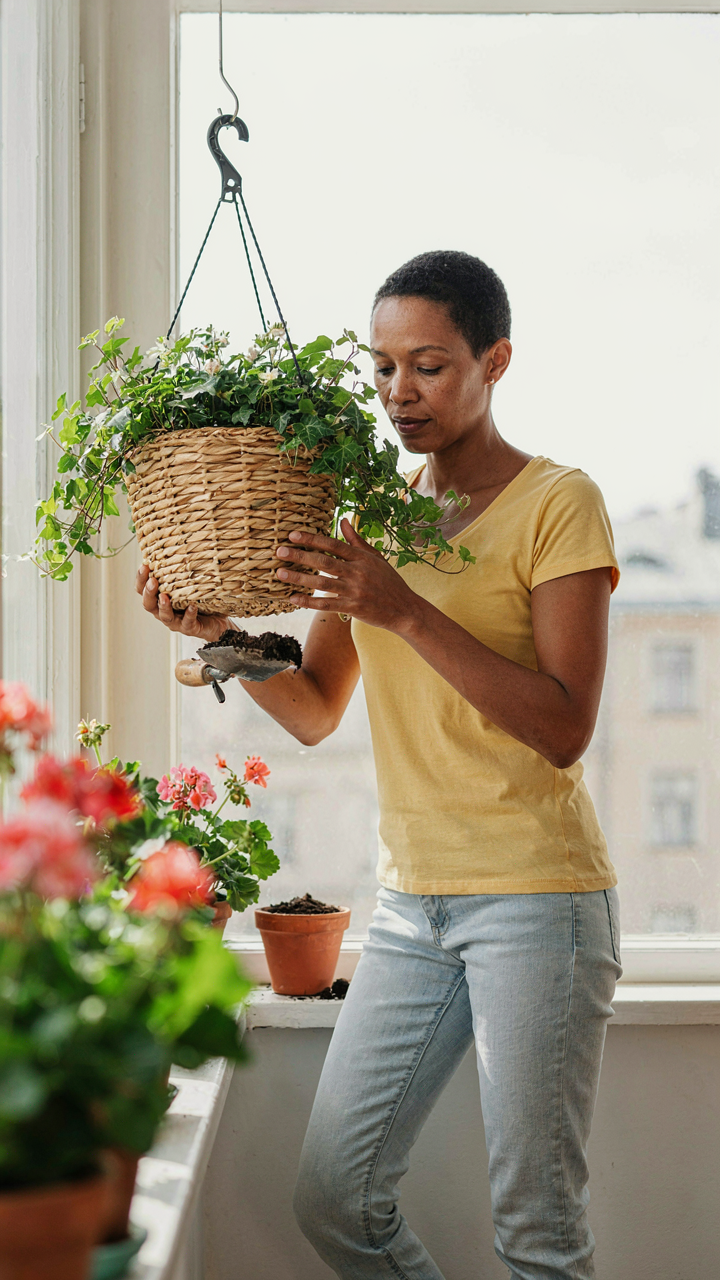
Refresh Your Mix When Performance Drops
You want to believe one soil mix lasts forever. It doesn’t. Soil degrades seasonally because its structure breaks down from water cycling, root pressure, and microbial activity. By mid-season, your original mix has compacted and lost the air pockets that made it work. This isn’t a failure of your technique. It’s physics. Replace the top two inches of soil every six weeks during active growth, and completely refresh the basket before the next season starts. Don’t wait for visible problems. Preempt them.
The refresh protocol is simple: cut back watering two days before work. Gently remove the top layer without disturbing roots. Replace it with fresh mix at the same ratio you used initially. Water normally the next day. This maintains drainage and nutrient availability without shocking the plant. Seasonal refresh costs less than replacing dead baskets. Track your refresh dates on a calendar. Consistency beats intuition here.
Soil As A Living System That Needs Feeding
Biology applies here, not just chemistry. Think of your soil as a microbial ecosystem. The microorganisms in your mix consume organic matter and release nutrients plants can access. As the season progresses, you deplete two resources: organic material and the microbes that break it down. Most growers ignore this and wonder why their baskets fade by August. The real mechanism is microbial collapse, not nutrient depletion alone.
Feed the system, not just the plant. Add a half-inch layer of finished compost to the basket surface every four weeks during the growing season. This replenishes organic matter and reintroduces active microbes. Water it in thoroughly. You’re not fertilizing. You’re maintaining the soil’s living function. This approach costs nothing if you compost kitchen scraps. It eliminates the need for synthetic fertilizers and keeps your mix performing through the entire season without total replacement until dormancy.
The Real Obstacle Isn’t The Soil, It’s Your Adherence To Static Solutions In A Dynamic World

Most people treat soil recipes like gospel. They don’t. Your hanging baskets live in your specific climate, your specific light, your specific neglect pattern. The soil mix that works changes. Stop searching for the perfect formula and start experimenting with the one in front of you. Today, grab your current mix, add one new ingredient, and observe what happens over two weeks. This is how you actually learn. The person who adapts beats the person who memorizes every time.



