
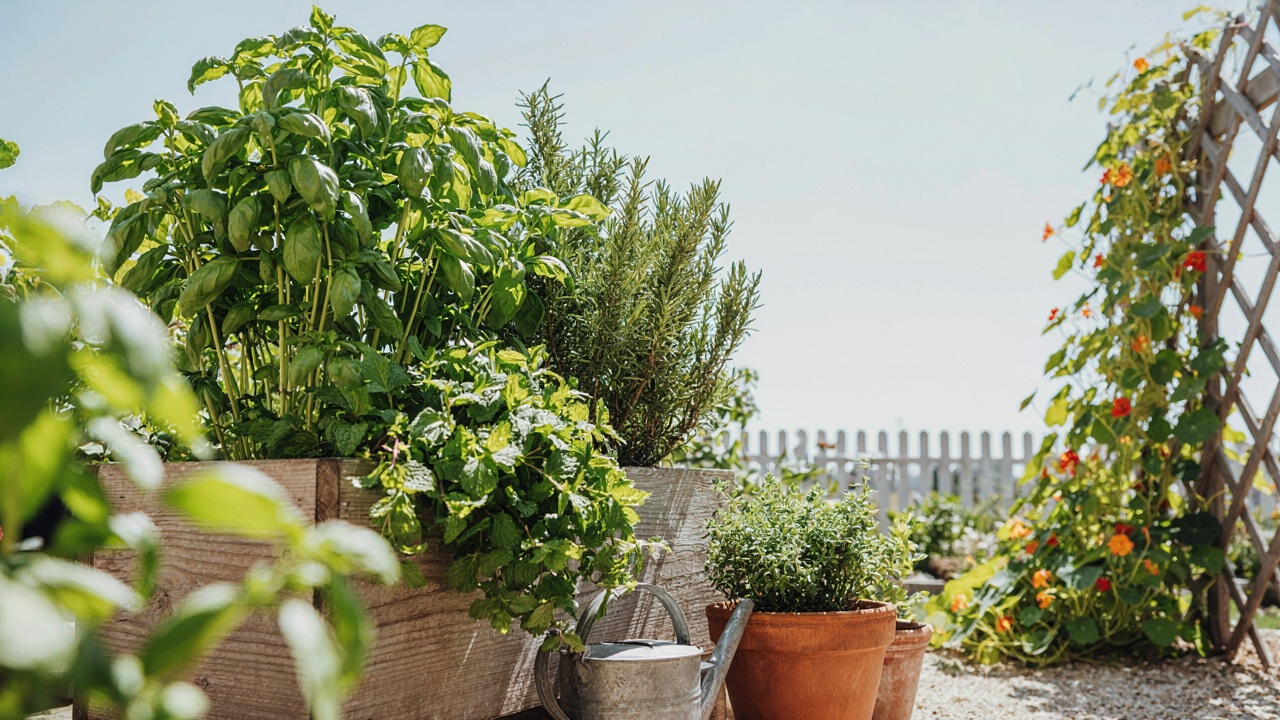
The Minimalist Herb Garden For Beginners Protocol
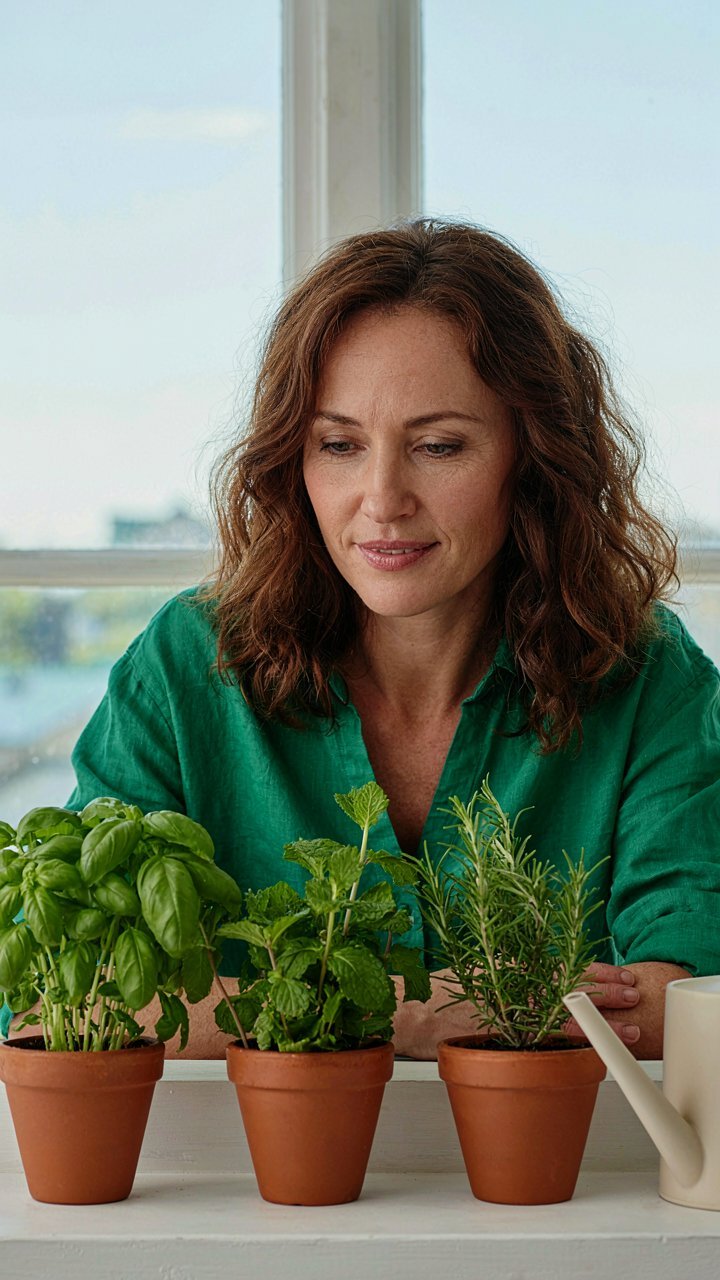
Start With Plants That Actually Survive Neglect
You want to feel like a gardener without the failure. That’s the real friction. Most beginners choose herbs based on what looks good in a recipe photo, not what survives their actual watering schedule. Economics teaches us the concept of comparative advantage—focus your effort where you generate the most output per unit of input. In herbs, that means basil, mint, and rosemary. These three forgive inconsistency and produce usable harvests within weeks, not months.
The mechanism is simple: these herbs evolved in Mediterranean and temperate climates where water scarcity is normal. Their root systems are shallow enough to establish fast but deep enough to handle drought. Start here. Skip the cilantro, dill, and parsley for now. You’ll kill them on your first rotation and quit entirely. Pick the three that match your climate zone and your actual neglect pattern, then master those before expanding your rotation.
Function First, Instagram Never
Most beginner advice says to arrange herbs by height and color for visual impact. That’s wrong. It’s garden theater, not gardening. Your only job is to build a system you’ll actually use. That means proximity to your kitchen, access to natural light, and a watering schedule you can sustain without thinking about it.
Position your herbs where you’ll see them during your morning routine. Proximity breeds consistency. If your herb garden sits on a shelf in the garage, you’ll forget it exists. Place it on a kitchen windowsill or by your coffee station. Establish a single watering day each week. Stop optimizing aesthetics before you’ve generated one usable harvest.
Beyond “Easy Herbs To Grow”: The Resilience Metric
Where Your Herbs Actually Come From
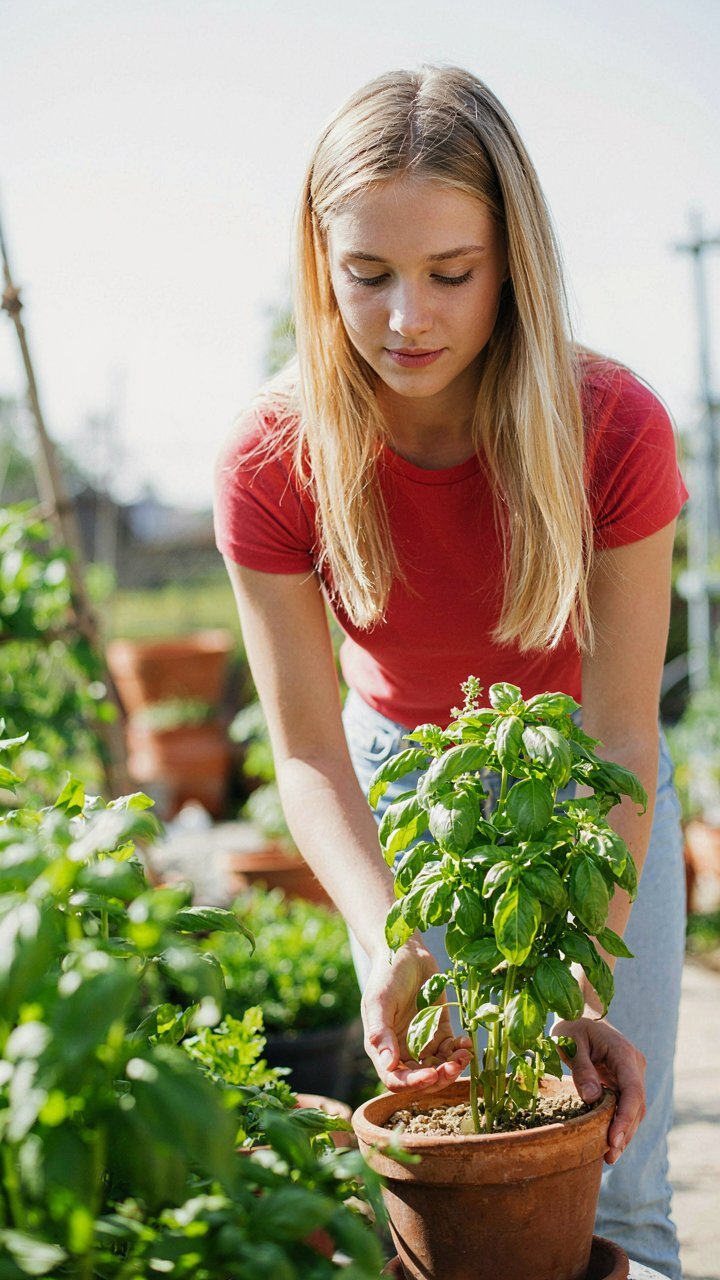
You want a herb garden that doesn’t die because you’re tired of feeling incompetent. Here’s what everyone skips: herbs are not domesticated plants. They’re wild species humans decided to eat. Ecology calls this “niche adaptation”—every organism thrives in specific conditions and fails in others. Your basil doesn’t care that it’s “easy.” It cares that it evolved in warm Mediterranean regions with well-draining soil and full sun. Match those conditions or watch it rot.
The common advice tells you to buy seeds and plant them. Wrong. You’re actually selecting for survival first, growing second. Before you buy anything, audit your actual conditions: how many direct sun hours does your space get, what’s your humidity level, what’s your soil composition, what temperature swings happen seasonally. These aren’t preferences. They’re your constraints. Work inside them and herbs thrive. Ignore them and you’re spending money on plant funerals.
Match Climate To Herb Selection
Mediterranean herbs—rosemary, oregano, thyme, marjoram—evolved in hot, dry, low-nutrient environments. They don’t need rich soil. They don’t want constant moisture. Plant them in poor soil with irregular watering and they strengthen. Give them wet, fertile conditions and they rot from root diseases. If you live in a humid climate with heavy rainfall, these fail repeatedly. That’s not a personal failure. That’s basic botany.
Asian herbs like mint and cilantro tolerate humidity and shade better. Cilantro actually bolts (flowers and becomes bitter) in sustained heat and full sun. It prefers cooler seasons and partial shade in warm climates. Mint spreads aggressively in moist conditions but struggles in drought. Your job is simple: identify your climate reality, then choose herbs with matching evolutionary history. This eliminates 90 percent of failure before you plant a single seed.
Outdoor Herb Garden For Beginners: The “Set And Forget” System
Where Your Herbs Actually Live Or Die
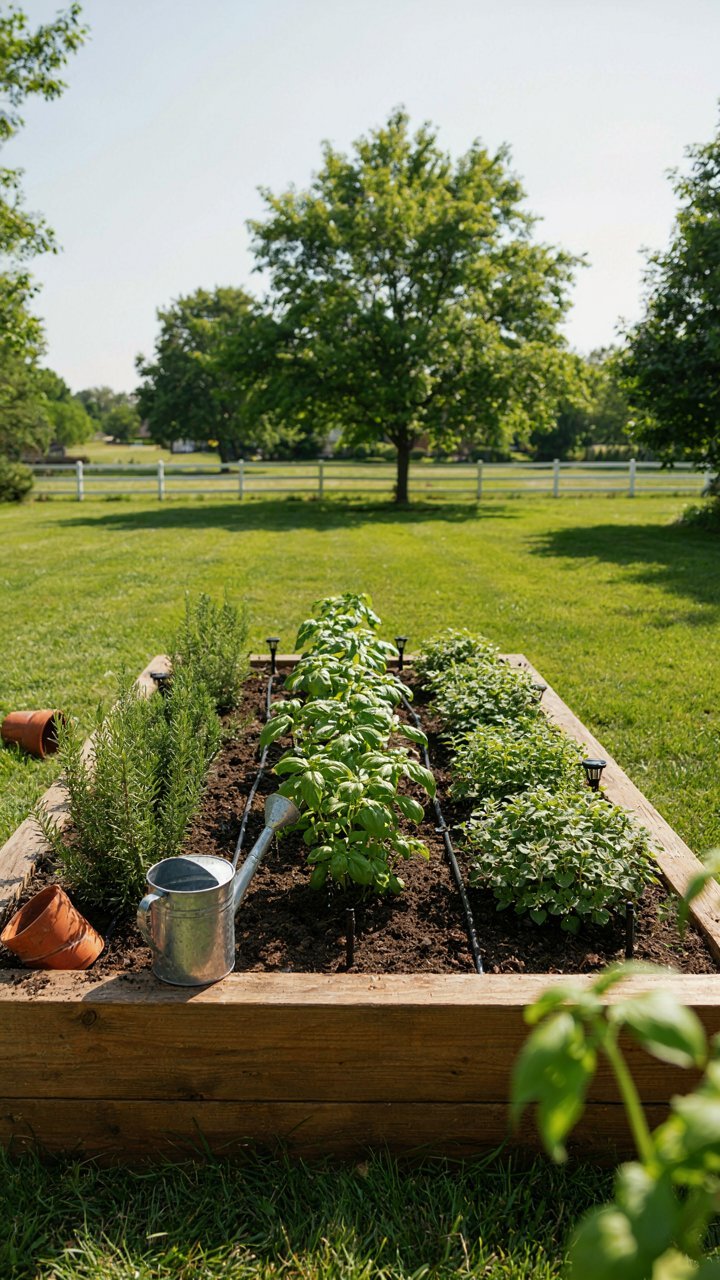
You want an outdoor herb garden because you think it makes you self-sufficient, but the real reason you’re reading this is you’re tired of killing plants and looking incompetent. Here’s what matters: location determines survival before you plant a single seed. Sunlight and drainage are not separate problems. They’re the same problem viewed from different angles.
Most herbs need six to eight hours of direct sun daily. This isn’t negotiable. Basil, oregano, rosemary, and thyme evolved in Mediterranean climates where shade is a luxury. Put them in partial shade and they’ll survive but weaken, becoming susceptible to mildew and pest damage. South or west-facing spots work best in most climates. East-facing works if you have intense afternoon heat. North-facing kills herbs. The mechanism is simple: photosynthesis drives vigor, and vigor prevents disease.
Drainage kills more beginner gardens than sunlight does. Waterlogged soil suffocates roots and breeds fungal rot. This matters because herbs despise wet feet. The solution isn’t just picking a spot with good water runoff, though that helps. It’s building your bed three to four inches above ground level. Raised beds or mounded soil both work. This small elevation shift changes everything. Water drains faster, soil warms earlier in spring, and roots access oxygen instead of stagnant mud. Check your spot after rain. If water pools there for more than an hour, choose somewhere else or build it up.
Watering Systems That Actually Work
Drip irrigation isn’t sexy, but consistency beats heroic effort every time. Most beginners underwater during hot spells or overwater after rain because they’re guessing. Automated systems eliminate guessing. You set it once and the mechanism handles the variable.
- Drip Tape: Lay porous tubing along your herb rows. Water seeps slowly, directly into soil. Reduces evaporation by 50% compared to overhead watering. Connects to a standard faucet timer.
- Soaker Hoses: Similar to drip tape but thicker and more durable. Good for gardens that stay in place year after year. Covers longer distances without pressure loss.
- Micro-Sprinklers: Small spray heads target individual plants or clusters. Works for containers grouped together. Adjustable flow rates prevent oversaturation on delicate seedlings.
- Battery Timer: Attaches to your faucet, automates any drip or soaker system. Costs fifteen to thirty dollars. Run your system early morning for sixty to ninety minutes, three to four times per week depending on heat.
- Moisture Sensors: Optional but useful. Probes measure soil wetness and trigger watering only when needed. Prevents overwatering during cool, wet periods and flags drought stress early.
The real discipline here is starting small and scaling up. Buy one drip line and one timer. Run it for two weeks. Observe what happens. Adjust the duration and frequency based on soil moisture, not your mood. Herbs in full sun need water more frequently than those in partial shade. Clay soil holds moisture longer than sandy soil. Once you dial in the schedule for your specific setup, you’ve solved the single biggest reason beginners quit: inconsistency. Set a timer to water at dawn four times weekly for ninety minutes, then stop thinking about it.
Growing Herbs Indoors: The Light Maximization Strategy
Measure Your Actual Light First
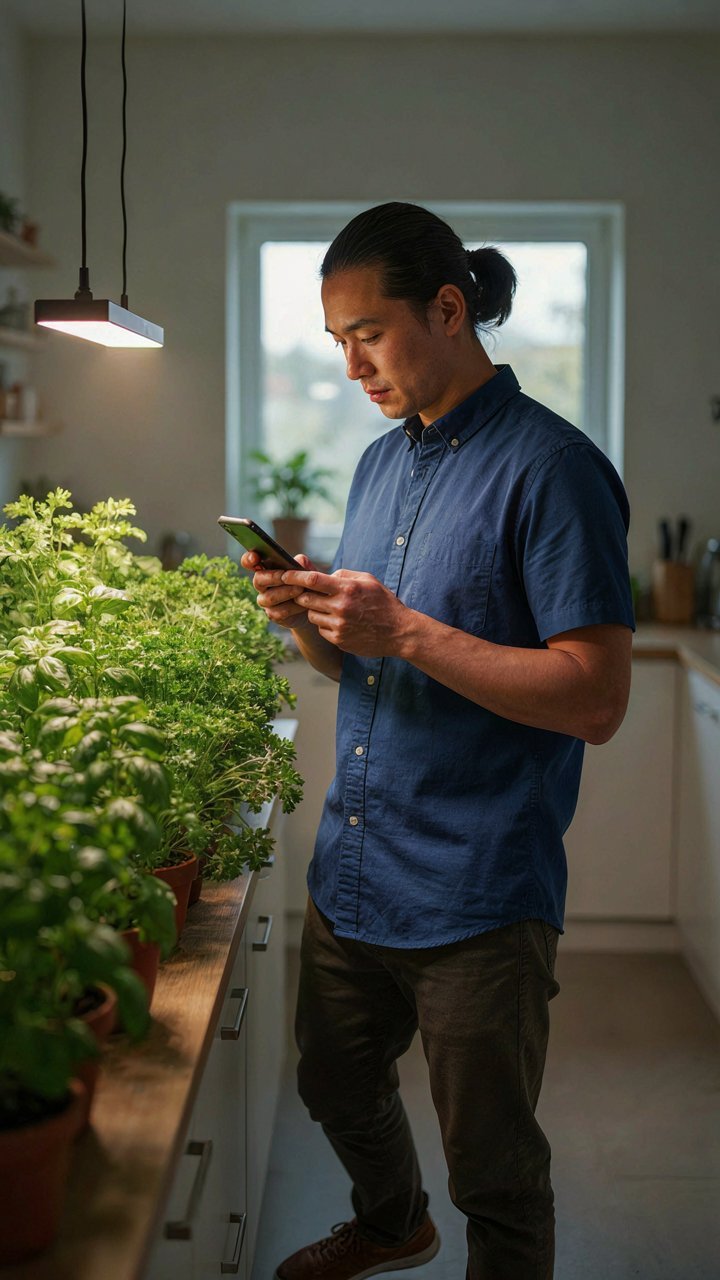
You want indoor herbs to work because you think it’s convenient, but you’re avoiding the reality that most kitchens are too dark. Borrow from agriculture’s concept of light saturation point: the moment a plant stops converting more light into growth. Your herbs have a minimum threshold before that point even matters.
Most rooms get 100 to 300 lux near a window. Basil needs 400 to 600 lux minimum. Measure what you actually have with a light meter app or real meter before buying anything. Place the meter at plant height, facing the light source, at the exact spot where your herbs will sit. North-facing windows fail. East and west windows work partially. South windows work best, but only if unobstructed. Your window’s true light value determines everything downstream.
Add Grow Lights That Match Plant Demand
The generic advice says any LED works. It doesn’t. Plants respond to specific wavelengths and intensity, not just on-off. You need 400 to 700 nanometers for photosynthesis, but intensity matters more than spectrum for herbs.
Most herbs thrive under 12 to 16 hours of light daily at 200 to 400 micromoles per square meter per second. LED grow lights rated 30 to 50 watts, positioned 6 to 12 inches above plants, deliver this range reliably. T5 fluorescents work but run hotter and less efficient than LEDs. Position lights on a timer so they run consistently. Inconsistent lighting creates weak growth and pest vulnerability faster than anything else. Set your timer and check it weekly to confirm it’s actually triggering.
Herb Garden Ideas For Beginners: The Permaculture Principle
Stacking Functions Companion Planting For Synergy
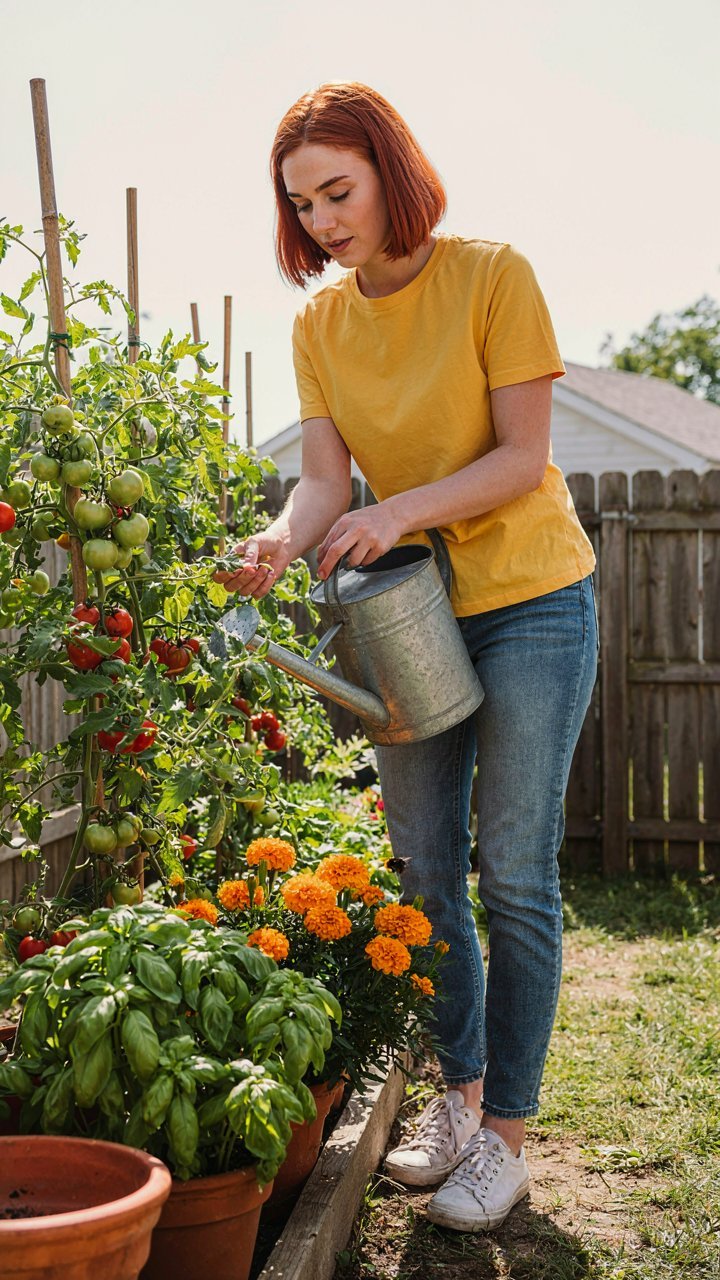
You want to feel like you’re doing something clever while saving money. The real mechanism is borrowed from systems thinking in ecology: you’re building redundancy. Each plant performs multiple roles simultaneously instead of existing as an isolated input-output unit. Basil repels insects while improving tomato flavor. Marigolds trap pests while adding visual density to the bed. Parsley feeds pollinators while you harvest the leaves. The garden stops being a collection of separate problems and becomes a single, interlocking system where failure in one area triggers backup functions in another.
Most beginner advice treats companion planting as garden trivia, a nice-to-have. It’s not. It’s the difference between a system that demands constant intervention and one that self-corrects. Plant borage near your herbs to attract pollinators and deter tomato hornworms. Position cilantro next to lettuce to create a microclimate that slows both from bolting in heat. Thyme beneath taller herbs reduces weed pressure while fixing nitrogen in shallow soil. The pattern is identical: select plants that solve problems you’ll actually face, not problems that sound good in articles.
Closed Loop Systems Organic Waste To Nutrients
The compost pile isn’t a garbage disposal for your kitchen scraps. It’s a nutrient recycling engine, and you control the input ratios to control the output quality. Permaculture calls this “closing the loop,” which means nothing leaves the system and nothing comes in that you don’t choose. Kitchen herb trimmings, fallen leaves, and spent plant material become finished compost in 8 to 12 weeks if you maintain proper carbon-to-nitrogen balance. You stop buying bagged amendments. You stop paying for waste removal.
Layer your composting system directly adjacent to your herb beds. Green waste (herb clippings, vegetable scraps) alternates with brown waste (dried leaves, cardboard). Keep moisture at a wrung-out sponge level. Turn every 7 to 10 days if you need compost faster, or leave it undisturbed for a slower process. When it breaks down into dark, crumbly material that smells like forest floor, move it into your beds. This cycle eliminates the monthly nutrient depletion that kills beginner herb gardens within a year.
Herb Planting Ideas For Beginners: Strategic Containerization

The Root System Ceiling
You want this to look effortless, like you didn’t overthink it. That’s exactly why you will overthink it. Container size is the mechanism that determines whether your roots expand or stagnate. Think of it through the lens of biology: available space governs root growth, and root growth governs nutrient uptake and plant vigor. A basil plant in a two-inch pot will never perform like one in a six-inch pot, no matter how much sunlight or water you provide.
The common mistake is buying containers based on how the garden looks, not how the plant functions. A pot too small suffocates the root system. Roots circle the container bottom, become root-bound, and the plant stops growing. A pot too large waterlogged the soil because the plant cannot drink fast enough. Most herbs need five to eight inches of depth and similar width. This sizing rule applies to parsley, mint, oregano, and thyme without exception.
Material Choices And Drainage Behavior
Terracotta and plastic function completely differently in how they manage moisture. Terracotta is porous. Water evaporates through the sides and bottom. This means soil dries faster, roots get more oxygen exposure, and you water more frequently. Plastic is non-porous. Water stays in the soil longer. This means less watering, but more risk of root rot if drainage holes aren’t adequate or if you overwater by habit.
Terracotta works best for herbs that tolerate dry conditions: rosemary, oregano, thyme. Plastic works best for herbs that prefer consistent moisture: basil, parsley, cilantro. The choice is not aesthetic. It’s a hydration strategy. Pick the material that matches your herb’s water requirement and your actual watering discipline. Terracotta containers require drainage holes in the bottom plus saucers underneath to catch excess water and protect your surfaces.
Herb Garden Inspiration For Beginners: The Stoic Gardener

Plant Failure Is Information, Not Shame
You want to skip the messy part and jump to the Instagram version where everything thrives. That’s denial. Here’s the mechanism: every dead plant is a data point about light, water, soil, or your habits. The gardeners who build real systems don’t avoid failure—they read it. A wilted basil plant tells you about drainage or watering frequency. A yellowing mint shows nutrient depletion or overwatering. You extract the signal, adjust the variable, and move forward.
Most beginners treat plant death as proof they lack a gift. Wrong framing. You’re running experiments with a sample size of one per plant. The stoic approach means you kill plants intentionally to find boundaries. Rosemary fails in wet soil? Now you know. Cilantro bolts in heat? Now you know. This isn’t failure. This is calibration. Document what happened, change one condition next cycle, and repeat. That’s how you build confidence—through concrete feedback, not motivation.
Iteration Over The Mythical First Success
The idea that your first herb garden must be perfect is sabotage dressed as inspiration. Forget it. Real gardeners start crude and refine. You plant basil, it thrives. You plant five herbs, two die. You plant ten herbs with better soil mix, six thrive. Each round you learn what works in your specific microclimate, with your specific schedule, under your specific light conditions. That’s not failure scaling—that’s signal improving.
The mechanism here borrows from systems engineering: you minimize variables per iteration. Cycle one, get one herb to grow reliably. Cycle two, add soil or container changes and test a second herb. Cycle three, add positioning or water schedule adjustments. Each cycle changes one or two inputs so you know what caused the result. After three to four growing seasons, you stop guessing. You have a system. Most beginners quit after cycle one because they expected cycle four results. Plant your first herb today, watch what happens, adjust next month.
Herb Gardens For Beginners: The “Less Is More” Cultivation Method
Water Only When The Soil Dries
You think overwatering kills plants because you’re careless. The real issue is you’re confusing attention with care. Soil biology operates on cycles, not constant moisture. When you water daily, roots rot because fungi and bacteria that need oxygen get suffocated. The mechanism is simple: wet soil excludes air. Dead roots can’t absorb nutrients. Your plant starves in a flooded pot.
Check soil with your finger one inch deep. If it’s dry, water. If it’s moist, wait. Herbs like basil, oregano, and thyme evolved in Mediterranean climates where rain came hard and then stopped. Pot soil dries faster than garden soil because it has less mass. Respect that constraint instead of fighting it. Water deeply when you do it, then let the pot drain completely. This cycle triggers root growth and strengthens the plant’s ability to handle stress.
Prune Aggressively To Redirect Energy
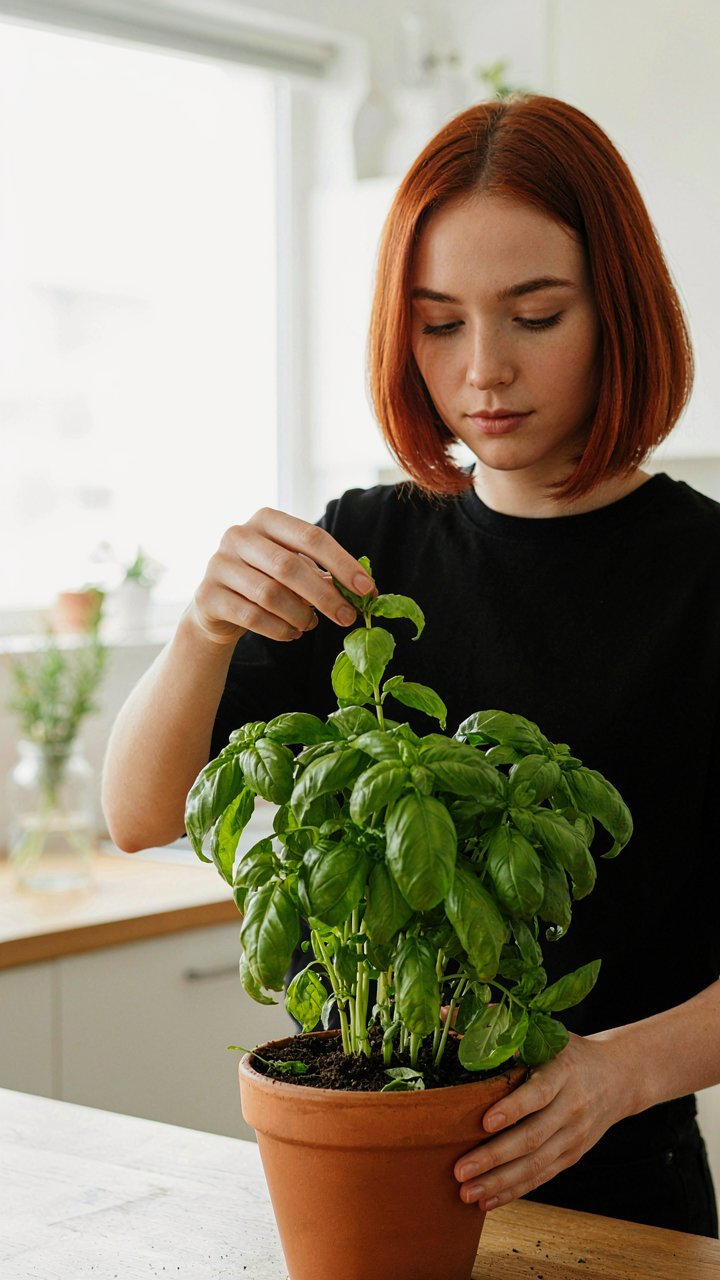
Pruning operates on the same principle as triage in emergency medicine. You remove the least valuable tissue to force the plant to allocate resources where they matter. Most beginners prune to shape the plant’s appearance. Wrong target. You prune to trigger branching and density. When you cut a stem, the plant responds by splitting that branch into two or three new shoots lower down. More shoots means more harvestable leaves and a bushier, more productive plant.
Start pruning when your herb reaches six inches tall. Pinch off the top quarter inch of each stem with your fingers or scissors. Do this every two weeks during the growing season. Never remove more than one third of the plant at once. Basil responds to aggressive pruning better than most herbs, rewarding you with thick growth that flowers later. Mint actually thrives on heavy cutting and spreads faster when trimmed. The protocol is consistent: small cuts every two weeks beat one large cut per season.
Herbs Indoors: The Ecosystem Mimicry Framework
Sealed Air Control For Leaf Survival
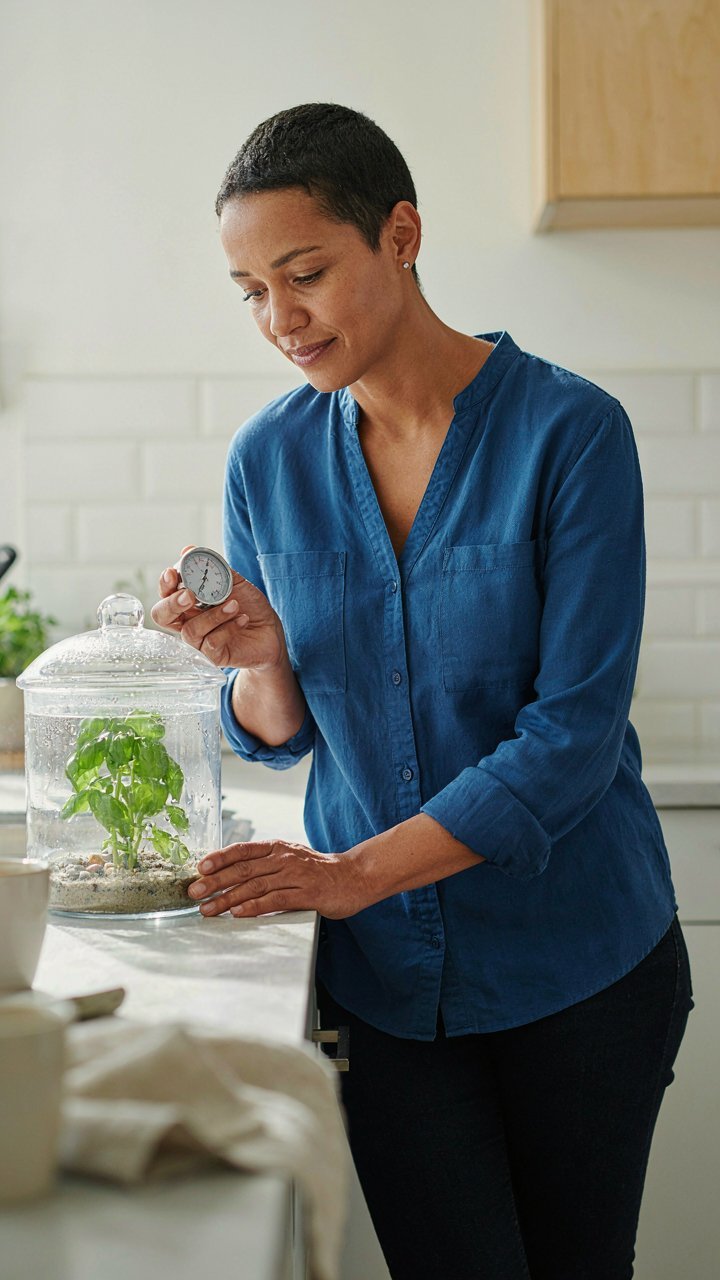
You want indoor herbs because you think you can cheat seasons and geography. You can’t, but you can engineer the boundary layer where air meets leaf. Borrow from ecology: plants evolved to live in specific atmospheric niches, and a terrarium is just a miniature biome with controllable boundaries. Humidity around herbs needs to stay between 40 and 70 percent indoors. Below that, leaves transpire too fast and wilt. Above that, fungal spores activate.
A sealed or semi-sealed terrarium container does one thing well: it traps moisture your herb roots release and recycles it as ambient humidity around the leaves. This cuts watering frequency by half because the plant recycles its own output instead of losing it to dry indoor air. The mechanism is straightforward: cover your container partially or fully, monitor condensation on glass, and crack it open if water pools on leaves for more than a few hours. Consistent humidity beats frequent watering every time.
Microbial Partners In Root Systems
The soil amendment conversation is incomplete without naming the real player: mycorrhizal fungi. This is plant biology, and the key term is “symbiosis” – your herb roots and fungal networks trade nutrients for sugars. Most beginner potting mixes are sterile, which kills both bad and good microbes. You’re starting from zero.
Add mycorrhizal powder to your potting soil before planting. Mix it in at the recommended rate on the package. The fungi colonize roots within two to three weeks and unlock nutrients the roots alone cannot access. You’ll see faster growth and stronger resilience to inconsistent watering. Reapply the powder annually or when you refresh soil in spring, since fungi colonies need replenishment in contained environments where they can’t spread naturally.
The Unspoken Truth About Stunning Herbs: It’s Not About Green Thumbs
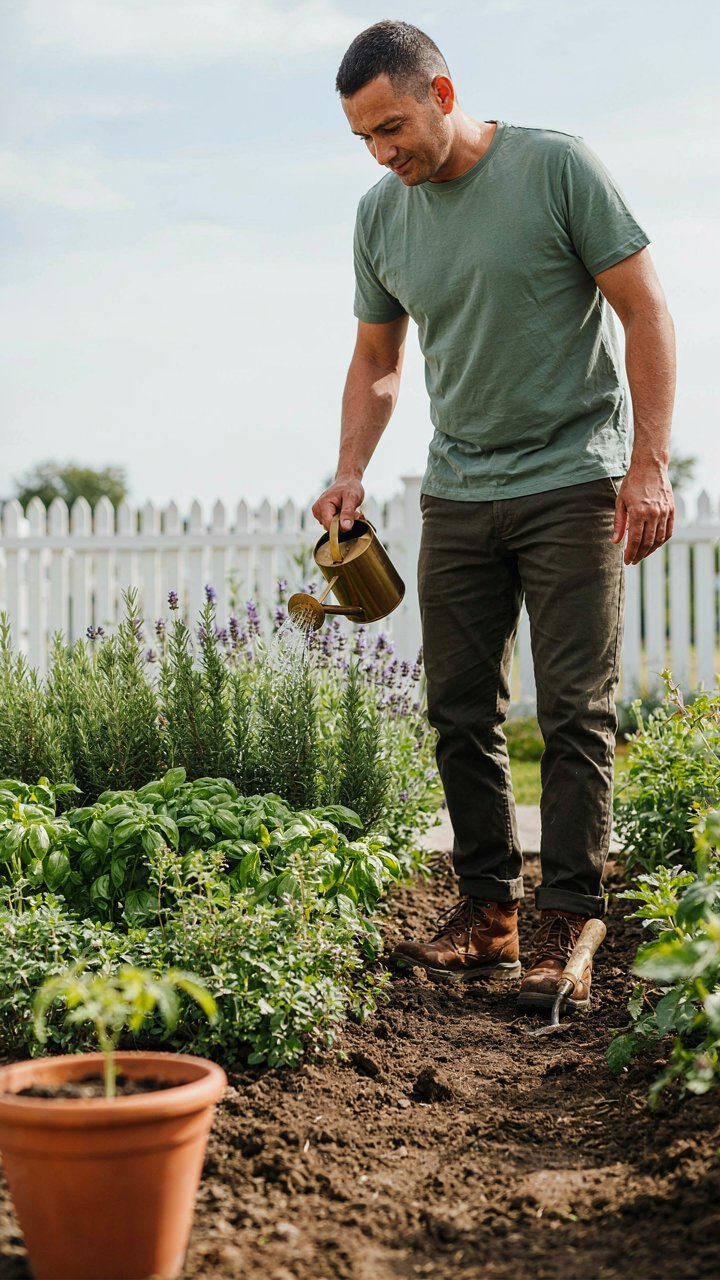
Plants Operate On Biology, Not Luck
You want herbs that look vibrant because you think it signals competence. Here’s the mechanism: plants respond to specific environmental conditions, and most beginners ignore this entirely. Biology dictates growth. Soil pH, light wavelength, nitrogen availability, moisture consistency—these aren’t nice-to-haves. They’re the variables that determine whether your basil thrives or dies. Treat herb gardening like applied biology, not decoration.
Most advice says “give it sunlight and water.” That’s incomplete. Basil needs six to eight hours of direct light daily because it evolved in Mediterranean climates where intensity matters. Parsley tolerates partial shade because it grows as an understory plant. Rosemary demands well-draining soil because it comes from rocky terrain where wet roots rot. When you understand why each herb needs what it needs, you stop guessing and start delivering results.
Consistency Beats Intensity Every Time
Your system fails because you treat herb gardening as a weekend project, not a daily protocol. Check soil moisture every morning with your finger one inch deep. Water when dry at that depth. Harvest leaves from the top down once the plant reaches six inches tall. Deadhead flowering stems before they bolt. These actions take five minutes. Do them daily, and your herbs compound into abundance. Do them randomly, and you get inconsistent growth that looks like failure.
The hard truth: discipline produces stunning herbs, not talent. Most beginners water erratically, then overcompensate by flooding the soil. They forget to harvest, so the plant invests energy in flowers instead of leaves. They neglect to remove dead growth, which blocks light and airflow. A watering schedule written down and followed beats inspiration every single time. Set reminders on your phone if you need to. Execute the protocol without exception, and visual results follow within weeks.
The Real Obstacle Isn’t Your Green Thumb, But Your Inability To Escape Beginner-level Thinking
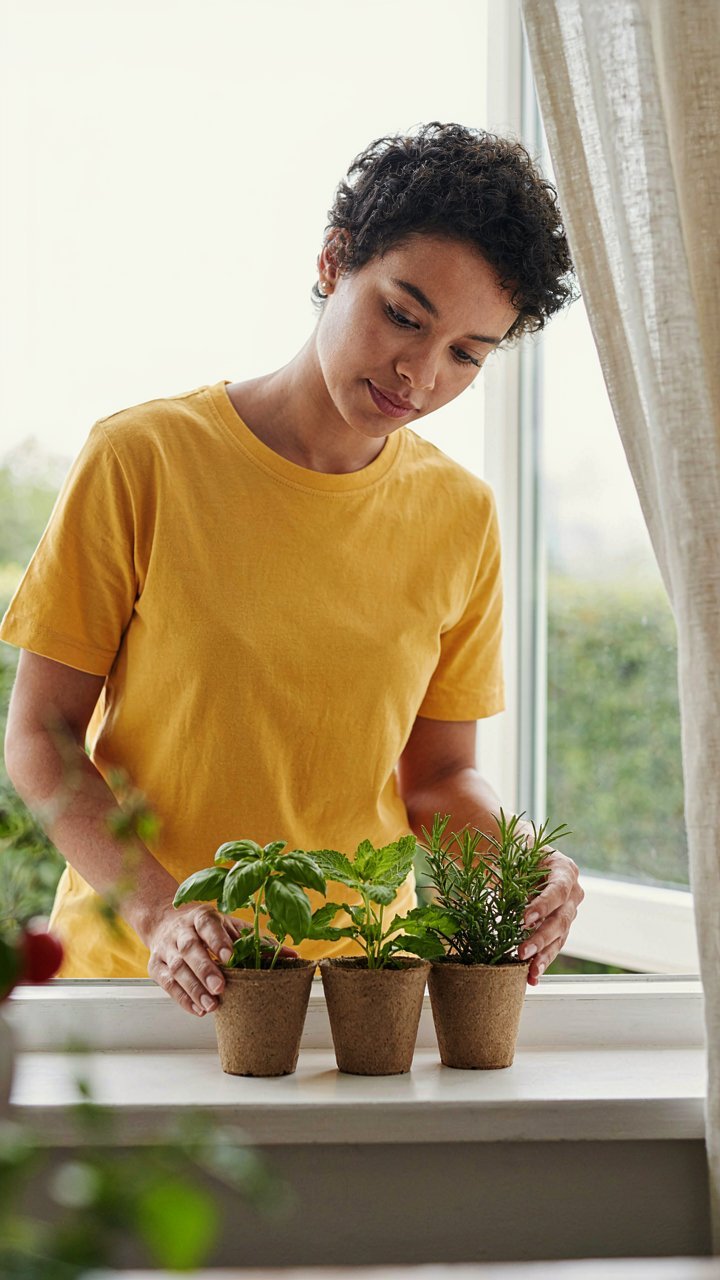
Most people abandon their herb garden because they wait for perfect conditions instead of starting with what they have. You don’t need the ideal setup. You need to plant something today, kill it, learn from it, and plant again. The shift from beginner to grower happens the moment you stop researching and start failing. Pick three herbs right now. Buy them tomorrow. Stop waiting for your future self to be ready because your future self is just your present self with more regret.