
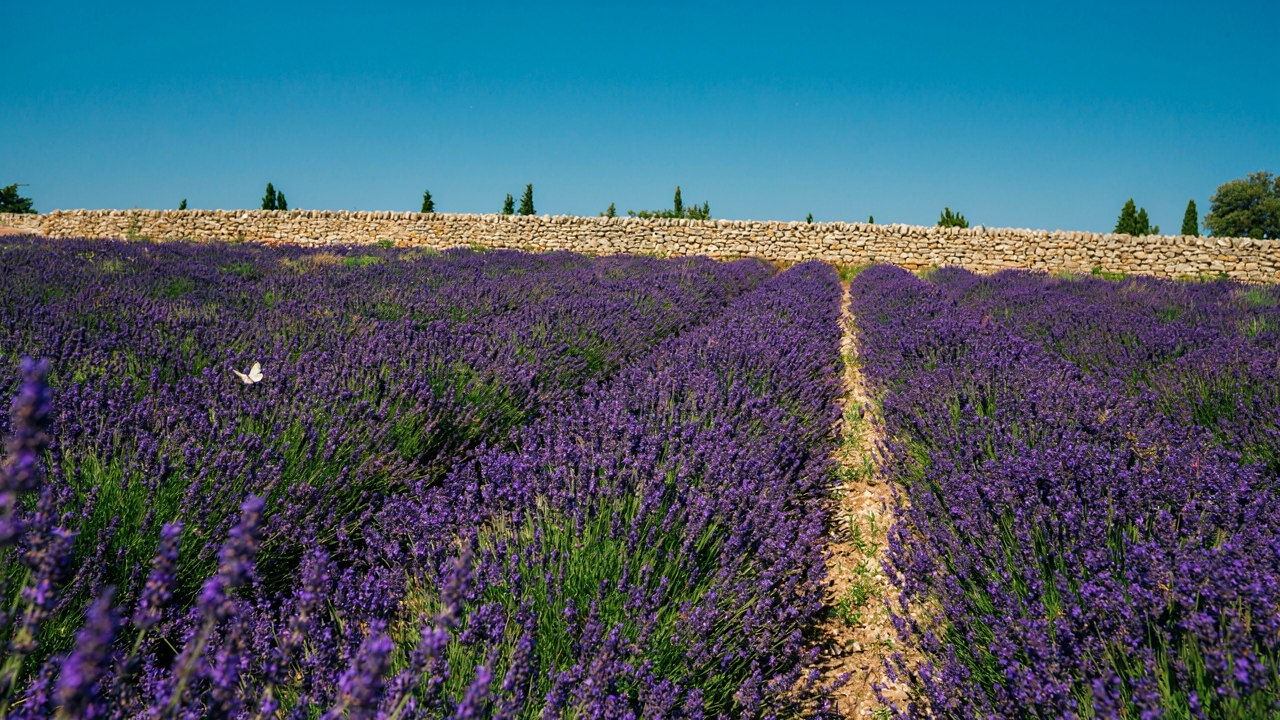
The Subterranean Truth: Soil, Not Seeds, Dictates Destiny

Drainage Imperative: Coarse Sand Ratios
You want a lavender garden because you’ve seen Instagram feeds and garden magazines make it look effortless. The real reason lavender fails isn’t neglect or poor timing. It’s waterlogged roots. Think of drainage like velocity in physics: the speed at which water moves through soil determines whether roots drown or thrive. Lavender demands fast drainage.
Most gardeners use generic potting soil or garden soil straight from a bag. Both hold too much moisture. Lavender thrives in Mediterranean climates where rain drains fast through rocky, loose ground. You need to rebuild that condition. Mix coarse sand at a ratio of 40 percent sand to 60 percent base soil, or go heavier to 50/50 if your native soil is clay. Coarse sand, not fine sand. Fine sand compacts and traps water. Coarse sand creates air pockets that let water move through in hours, not days.
PH Mythology: Stop Over Amending
The generic advice says lavender prefers alkaline soil and you should add lime to raise pH. This is incomplete guidance masquerading as fact. Lavender grows in pH ranges from 6.5 to 8.0. Most native soils already sit in this range. Over-amending with lime creates a different problem: nutrient lockup. High pH prevents the plant from absorbing iron and manganese, which causes yellowing leaves that look like disease.
Test your soil first. If you’re between 6.5 and 8.0, stop. Add nothing. If your soil tests below 6.5, raise it gradually with lime, not all at once. If it’s above 8.0, work with what you have because lavender tolerates it. The mechanism is simple: plants absorb nutrients through roots at specific pH levels. Miss that window and amendments become irrelevant. Your job is to measure, not assume.
Sunlight Alchemy: Maximizing Photosynthetic ROI For Lavender In Garden
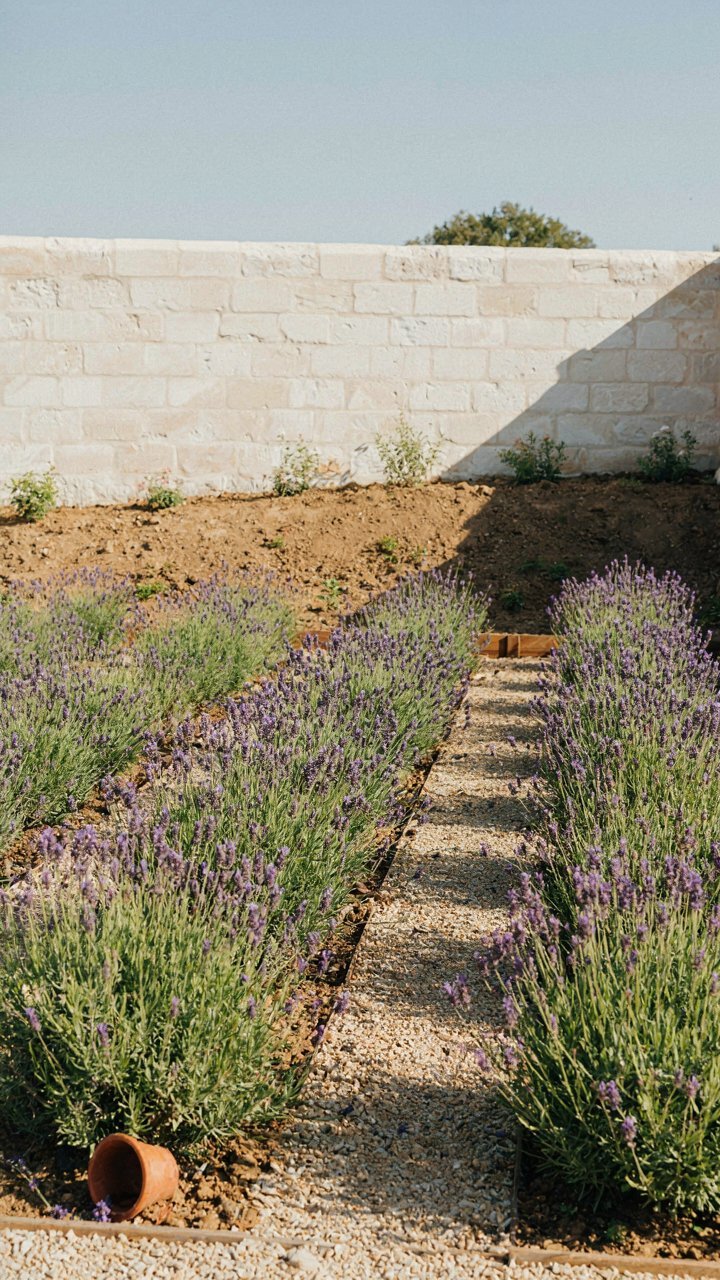
South Facing Slopes Direct Maximum Light
You want this section because you’re afraid your lavender will underperform and you’ll waste money and time on a dead garden. The mechanism is simple: lavender converts sunlight into volatile oils that create its scent and medicinal value. South-facing slopes capture the sun’s arc from morning to afternoon at the steepest angle possible in the Northern Hemisphere. This isn’t opinion. The physics of solar geometry dictates that a slope tilted toward the equator receives more direct radiation per square meter than flat ground.
Most gardeners treat slope orientation as optional detail. It’s not. Lavender demands 6 to 8 hours of direct sunlight daily to produce the oil concentration that makes the plant worth growing. South-facing terrain delivers this reliably across seasons. If your property lacks a natural slope, build one. A 15 to 20 degree angle redirects enough light to shift lavender from surviving to thriving. Position your beds perpendicular to the sun’s winter trajectory so you capture both morning warmth and afternoon intensity.
Reflective Surfaces Amplify Available Light
Reflective surfaces work because they redirect scattered photons back into the plant’s leaf canopy instead of losing them to air space. Water features, light-colored stone mulch, and whitewashed walls behind lavender beds act as passive mirrors. They bounce diffuse light that would otherwise skip the plant entirely. White gravel mulch around lavender increases available light by 15 to 25 percent compared to dark mulch. This compounds the photosynthetic rate without adding labor.
Position reflective elements to face the same direction as your lavender beds. A south-facing white stone wall behind your lavender catches afternoon light and bounces it back through the foliage for a second exposure. This matters most in late autumn and winter when the sun angle drops. Install reflective surfaces before planting so you design the light environment first, then place the plant inside it. This inverts the typical approach of planting first and hoping light will work out.
The Water Paradox: Scarcity As A Growth Catalyst
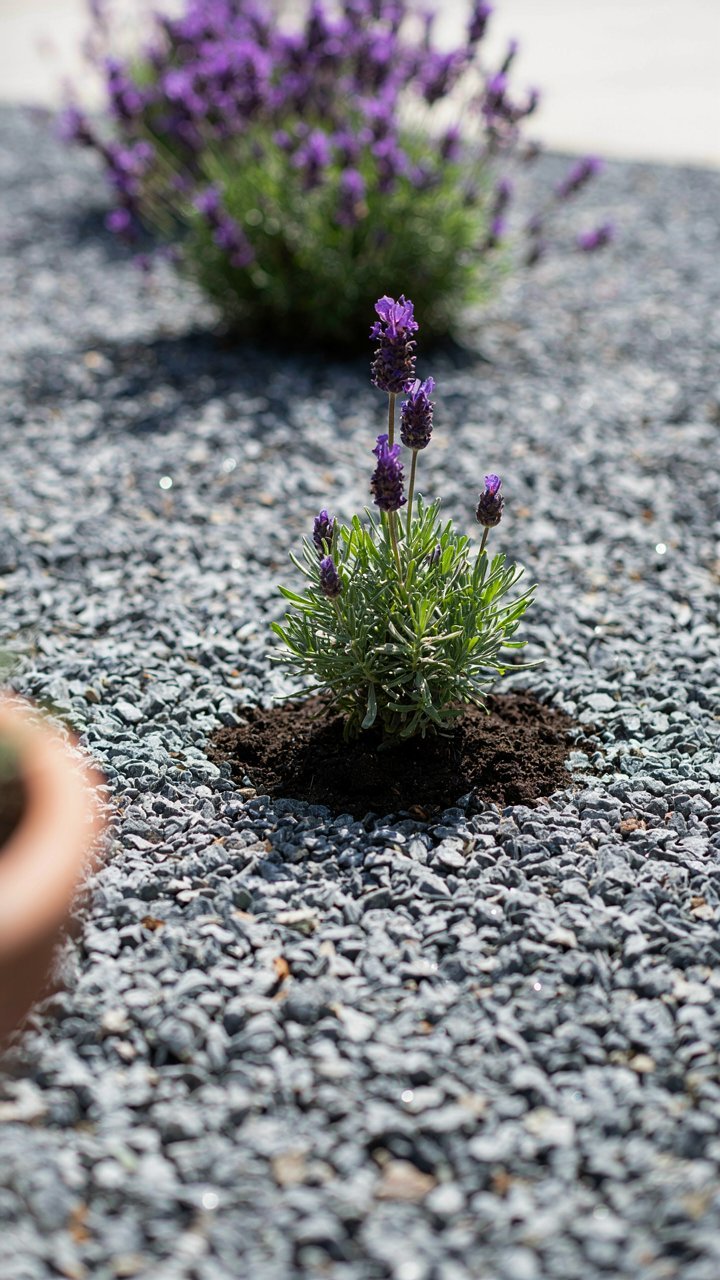
Deep Infrequent Watering Protocol
You want your lavender to thrive without constant maintenance because you’re busy and because frequent watering makes you feel like you’re doing something. Here’s what actually happens: lavender evolved in Mediterranean climates where water arrives in bursts, not trickles. Shallow frequent watering trains roots to stay near the surface, competing for moisture that evaporates fast. Deep infrequent watering forces roots down into stable soil layers where they find consistent moisture and mineral density.
Water lavender once every seven to ten days during growing season, delivering water until it drains from the pot or soil base. This isn’t arbitrary. You’re establishing a rhythm that matches plant physiology, not your emotional need for control. Between waterings, the soil dries enough to prevent root rot and force root depth. The plant learns to work harder for resources instead of lounging in damp topsoil where fungal disease waits.
Gravel Mulch For Evaporation Control
Everyone knows mulch “helps retain moisture.” That’s incomplete. In lavender gardens, mulch serves a different mechanism: it creates a microclimate barrier that slows surface evaporation while allowing air circulation around the crown of the plant. Without mulch, water evaporates from bare soil before roots can absorb it. With dense organic mulch like wood chips, you create a wet blanket that stays moist and rots the crown where it touches the stem.
Apply one to two inches of coarse gravel or small stone chips around the base, leaving two to three inches clear around the stem itself. Gravel reflects heat instead of absorbing it, keeps soil temperature stable, and dries quickly after rain so the crown stays exposed to air. This is why Mediterranean gardeners use gravel or rocky soil, not bark mulch. Check soil moisture two inches below the surface before watering again.
Pruning: The Brutal Necessity For Prolific Blooms And Robustness
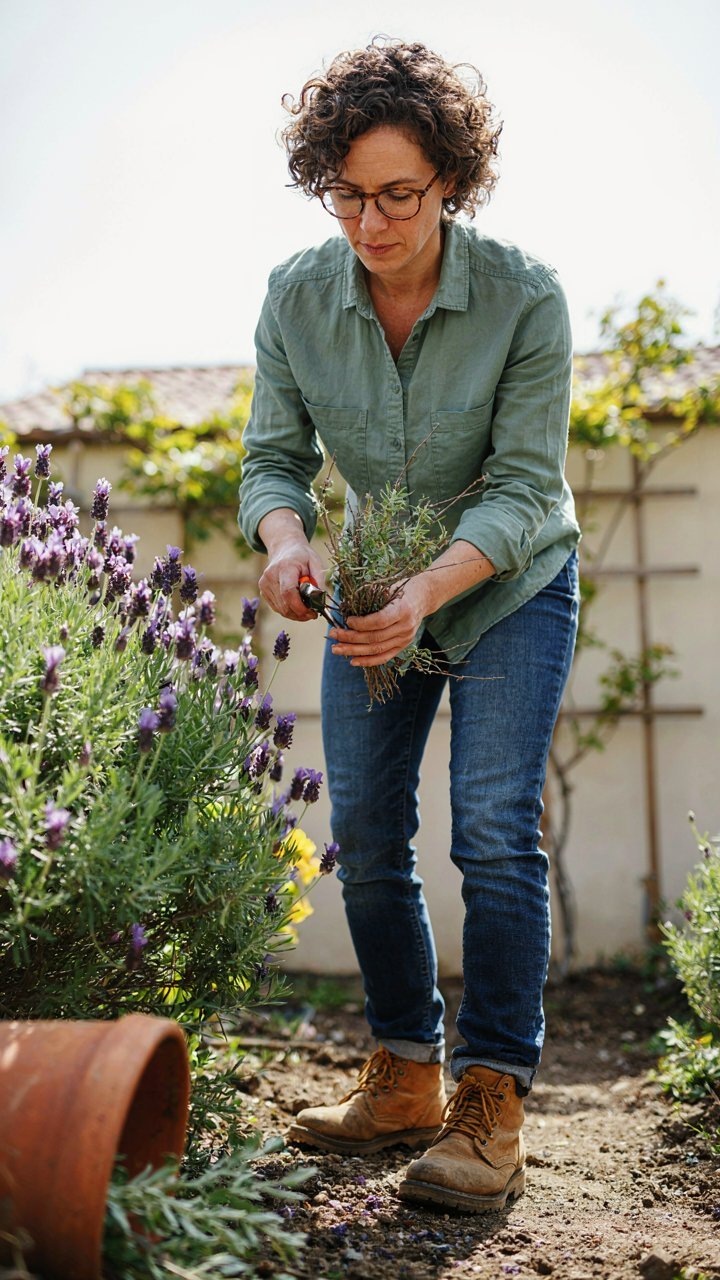
The Hard Cutback That Changes Everything
You want your lavender to look full and productive without turning into a dead stick by year three. Here’s the mechanism: lavender grows new shoots from the base only when you force it to by removing old wood. Most gardeners prune too timidly, shearing the top inch and wondering why their plants get leggy and sparse. One hard cutback per year, done right, is the difference between a plant that flowers for five years and one that quits by year four.
Execute your cutback in early spring, just as new growth emerges at the base. Cut back one-third of the plant’s height, targeting old woody stems rather than just green tips. On mature plants, you can cut more aggressively, removing up to half the plant if it’s already overgrown. The timing matters because you need to catch new basal growth starting before you cut, otherwise you risk cutting into bare wood that won’t regenerate. Prune when the plant is actively waking up, not dormant.
Open The Plant For Air And Survival
Think in terms of flow dynamics from fluid mechanics: air needs to move through lavender the way water moves through an open channel, not pooling in dead zones. Dense lavender becomes a humidity trap that invites fungal disease and stem rot. Most advice says to shape lavender into a mound, which is correct, but nobody explains why: you’re creating a form that naturally sheds moisture and lets air penetrate all the way to the base.
Prune to create an open center and tiered branching structure. Remove any crossing or inward-facing stems that block airflow. Cut side branches shorter than the main stem height, building a profile that looks like an inverted cone. This shape serves two functions simultaneously: it maximizes flowering surface area while minimizing moisture accumulation at the center where rot starts. Do this during your spring pruning pass, not as a separate step. Air moves freely through an open lavender plant, and disease has nowhere to hide.
Beyond Companion Planting: The Symbiotic Garden Ecosystem
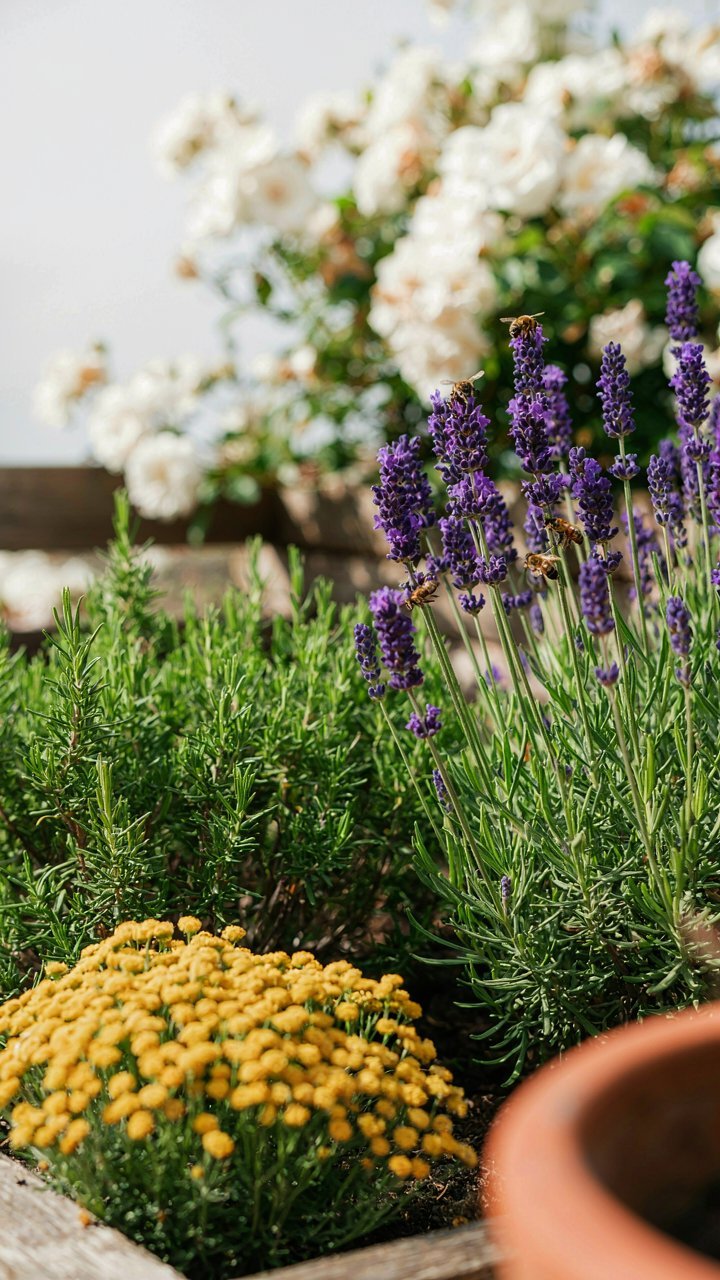
Rosemary And Lavender Garden: Strategic Plant Pairings
You want companion planting to feel like a formula you can follow without thinking. It’s not. The real mechanism is resource competition. In ecology, niche differentiation means organisms use the same space without fighting for identical resources. Lavender and rosemary exploit this principle because they compete for nothing that matters.
Both plants require full sun, lean soil, and infrequent water. They thrive in the same pH range (6.0 to 8.0). The difference: lavender has shallow fibrous roots in the top eight inches of soil; rosemary roots deeper, accessing moisture and nutrients below. They occupy separate vertical zones. You plant them adjacent without yield loss because they’re not actually fighting. Add Mediterranean herbs that share this pattern, and you stop wasting garden real estate on filler plants.
- Santolina: Fine-textured foliage with yellow button flowers. Roots deeper than lavender but shallower than rosemary. Attracts parasitoid wasps that hunt pest insects.
- Catmint (Nepeta): Similar water and light needs as lavender. Blooms slightly later, extending flowering season in the same footprint. Deer-resistant like its companions.
- Marjoram: Shallow-rooted herb that fills gaps between lavender plants without competing for deep moisture. Culinary use makes dual-purpose spacing efficient.
- Salvia (Greggii): Mid-depth root system. Continuous bloom through season. Draws hummingbirds and bees to the same pollinator corridor as lavender.
- Germander: Compact growth, deep roots, drought tolerant. Acts as a structural border around lavender clusters while occupying unused soil depth.
The practical move: map soil depth before planting. Dig test holes at twelve and twenty inches. If you hit hardpan or clay, amend only the top twelve inches for lavender and shallow herbs. Let rosemary establish in unamended lower zones. This forces root stratification and eliminates the guesswork of whether plants actually coexist or just look planted together.
Beneficial Insect Attractors
Most gardeners think beneficial insects show up because the garden is “healthy.” Wrong. They show up because you provide their exact food sources at their exact life stages. The mechanism is phenology matching: timing the blooms of multiple plants so the garden feeds predatory insects continuously, not in gaps.
Lavender attracts adult parasitoid wasps and hoverflies because its nectar and pollen are accessible to their short mouthparts. But those wasps lay eggs in spring. Their larvae need soft-bodied prey like aphids and thrips immediately. You need early-blooming plants that trigger pest insect emergence before lavender flowers. Plant alyssum, calendula, and cilantro as early nectar sources. They’ll flower before lavender, feeding adult beneficial insects while their offspring develop on emerging pests. By the time lavender peaks in mid-summer, the pest population is already suppressed. Lavender then sustains the beneficial population through its long blooming window. This isn’t companion planting. It’s a staggered predator-prey timeline you engineer deliberately.
Dense flower clusters matter more than flower count. Parasitoid wasps waste energy on isolated blooms; they need to land once and access multiple flowers without flight. Lavender’s spike architecture does this. Combine it with similarly dense bloomers like catmint, salvia, and sweet alyssum. Hover flies need exposed landing zones on petal clusters. Avoid double-flowering varieties that look impressive but starve beneficial insects of pollen. Check plant labels before purchase. Single-petaled varieties and native cultivars retain the nectar and pollen structure that insects actually use.
The Herb Garden Design: From Chaos To Calculated Harmony
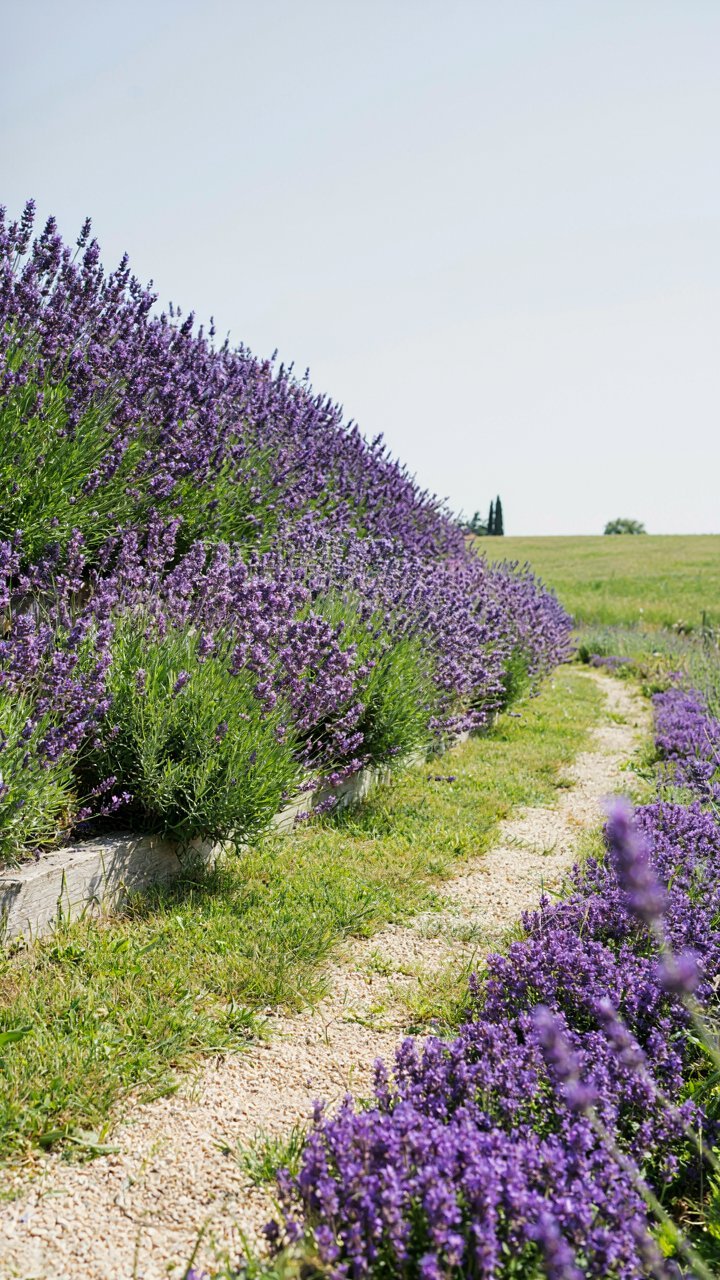
Elevation Changes Build Visual Hierarchy
You want people to see your garden and think you planned it. That’s the real reason this matters. Elevation works like visual hierarchy in design: the eye travels through intentional depth instead of scanning a flat plane. Lavender at different heights forces the viewer’s gaze to move, creating perceived complexity from simple repetition.
The mechanism is straightforward. Place taller lavender varieties like Grosso or Spanish in the back or center. Plant Munstead or Hidcote at mid-level. Edge with dwarf cultivars like Nana Atropurpurea in front. This isn’t decoration. Tiered heights prevent wind from pooling around lower plants, improve air circulation, and reduce fungal pressure. Each zone drains differently too.
Stacking Functions Into Single Elements
Permaculture borrowed from ecology the principle of stacking: one zone performs multiple outputs simultaneously. In lavender garden design, this means each plant works four jobs at once instead of one. Most gardeners miss this and treat layout as purely aesthetic.
Plant lavender as a windbreak, pollinator magnet, harvest source, and soil erosion barrier simultaneously. Spanish lavender near the garden’s north edge blocks wind while thriving in harsh exposure. English lavender in massed groups attracts bees and gives you cutting material while stabilizing compacted soil. French lavender at transitions between beds marks pathways while its shallow roots don’t compete with vegetables nearby. The final step is mapping which functions matter most in your specific microclimate, then choosing cultivar placement accordingly.
The Anti Fertilizer Mandate: Nature’s Nutrient Cycle

Underground Partnership Networks
You want a lavender garden that looks effortless because you’re tired of fighting the soil. The real mechanism is mycorrhizal fungi, borrowing from biology’s term symbiosis, which in your garden means lavender roots form partnerships with fungal networks that do the nutrient extraction work you can’t buy in a bag.
Lavender roots connect with mycorrhizal fungi that extend far beyond what the plant alone could reach. These fungi trade nitrogen, phosphorus, and trace minerals they pull from organic matter and mineral particles in exchange for sugars the lavender produces through photosynthesis. This is why aggressive fertilizing actually damages the relationship, starving the fungal network of its incentive to work.
The Microbial Balance Sheet
The common advice to “enrich your soil” before planting lavender is incomplete. What actually matters is bacterial and fungal populations that regulate nutrient availability at the plant’s root interface, not total nutrient concentration in the soil.
A healthy soil food web contains bacteria that mineralize organic matter into plant available forms, fungi that extend root reach, protozoa that consume bacteria and release their nitrogen, and nematodes that keep populations in check. Lavender thrives when this balance exists because the plant never faces nutrient shock or overdose. Adding synthetic fertilizer disrupts microbial populations by altering soil chemistry faster than organisms can adapt.
Stop adding inputs. Start building biology by incorporating compost annually, maintaining consistent moisture without waterlogging, and letting the system establish itself over one growing season before expecting peak performance.
Balcony Herb Gardens: Maximizing Micro Spaces With Macro Impact
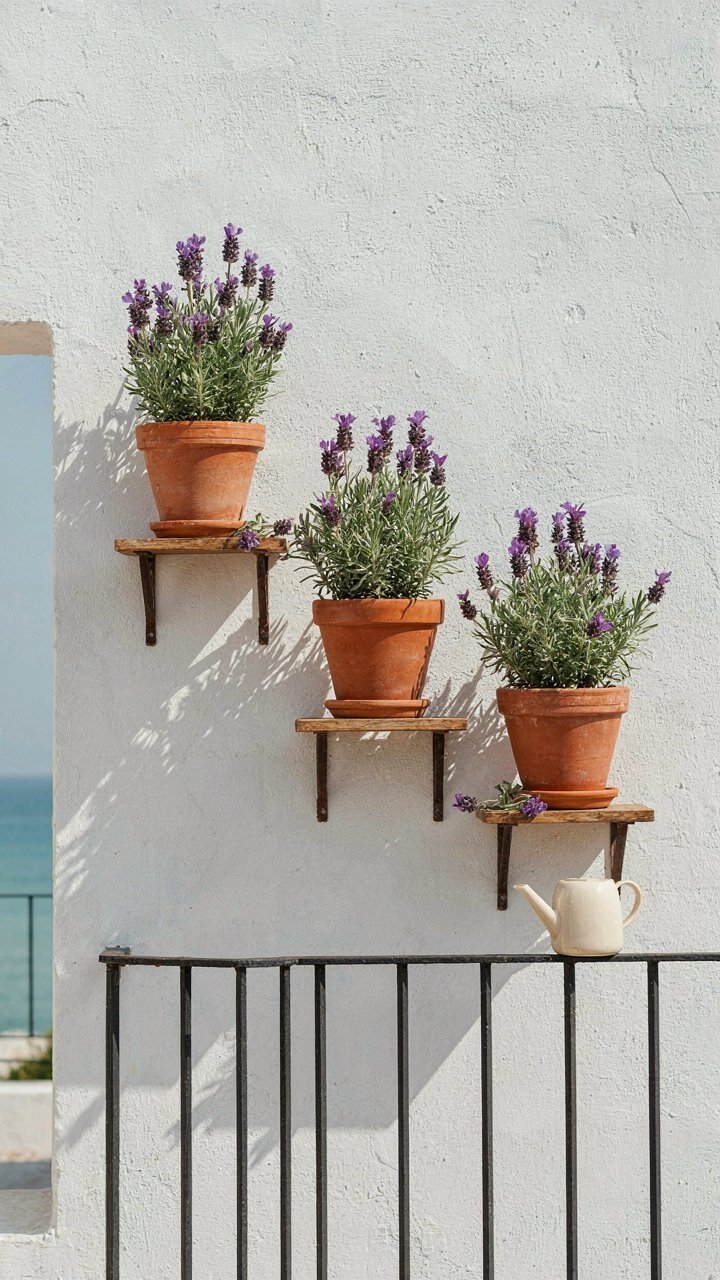
Container Selection: Root Volume Optimization
You want proof that you can garden anywhere—that constraints don’t matter. They do. The real mechanism here is simple: lavender roots demand oxygen and drainage, not soil volume. People obsess over pot size when they should obsess over what happens to water the moment it hits the soil.
Lavender needs containers between five and seven gallons minimum. Smaller pots dry too fast in sun and drown in shade. Root rot kills lavender faster than neglect does. Terracotta breathes but demands daily watering on hot days. Plastic retains moisture longer, which sounds good until it doesn’t—waterlogged roots develop fungal issues within weeks. Drainage holes are non-negotiable. Elevate containers on pot feet to prevent water pooling underneath.
Tiered Vertical Growing Systems
This applies architecture from vertical farming—the concept of “stacking layers” to maximize yield per square foot translates directly to balcony lavender placement.
- Wall-mounted shelving units: Stainless steel or powder-coated metal brackets hold three to four tiers. Position lavender on south-facing walls where sun exposure reaches multiple levels without shadowing lower plants.
- Tiered plant stands: Pyramid or step-style stands occupy minimal footprint while creating distinct microclimates. Taller lavender sits higher; shorter varieties go lower to prevent canopy collapse.
- Hanging systems with rebar: Overhead rods suspended from pergolas or railings free ground space. Lavender tolerates hanging containers if drainage holes prevent water pooling on leaves below.
- Corner ladder racks: Wooden or metal ladder designs fit tight balcony corners. Angle matters—adjust slope to direct runoff away from adjacent containers or railings.
- Tiered vertical cones: Spiraling trellis frames hold six to eight individual pots at staggered heights. Wind exposure increases at higher tiers, so monitor soil moisture more frequently.
Stacking containers creates microclimates. Upper tiers receive full sun and dry faster. Lower tiers stay cooler and wetter. Rotate lavender types across tiers based on their specific drainage tolerance—drought-resistant varieties higher, slightly thirstier cultivars lower. Check soil moisture in the bottom tier daily because it captures runoff from above and often stays saturated.
The Real Obstacle To Your Stunning Lavender Garden Isn’t Knowledge, It’s Your Addiction To Complexity
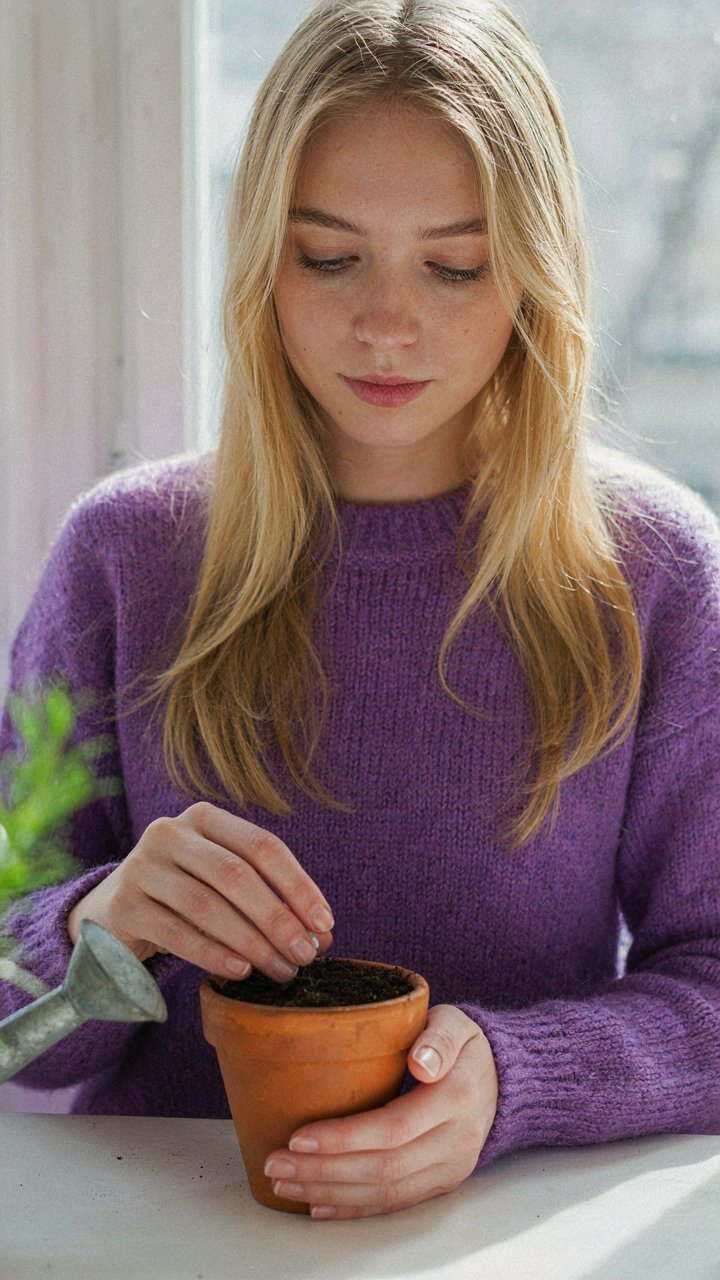
You don’t need a fifteen-step system. You need dirt, seeds, and sunlight. Most people sabotage their lavender herb garden before planting because they’re waiting for perfect conditions that never arrive. Stop researching. Buy lavender seeds today and put them in the ground tomorrow. Everything else is noise that keeps you from actually building something. The only way to learn lavender is to grow it.